
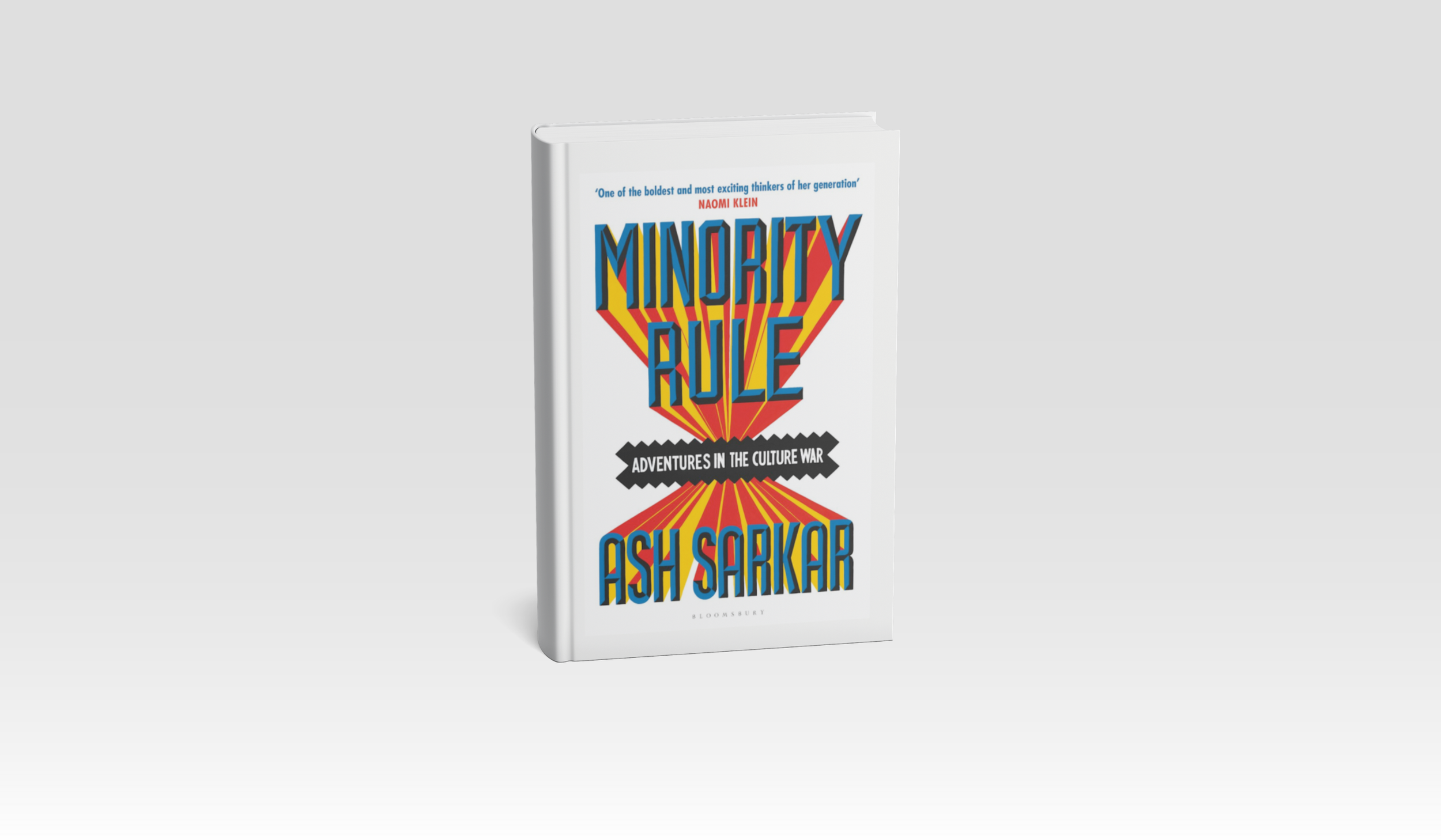
Minority Rule: Adventures in the Culture War by Ash Sarkar
Sarkar’s modern Marxist manifesto offers the left a much-needed reality check.
For me, alongside most of Gen Z, the former glory of the British left seems no more than a mere myth, passed down by faltering voices and growing increasingly distant with every parliamentary defeat. Gaining political consciousness within the chaos of Brexit and ageing into adulthood just in time to witness Corbyn’s crushing defeat, the subordination of the left has always felt like an unfortunate political fact. For many, classism has an almost vintage-y feel; the ancient and dusty plight of our parents, with Thatcher and the other apparitions of the 80s dying long before we knew we were born. As trade unions collapse and apathy eclipses action, it’s difficult to envision a viable alternative.
In Minority Rule, Sarkar maps the left’s decline alongside the rise of identity politics and growing influence of right-wing media, imparting one clear instruction onto her readers: to stop whinging and pull ourselves together. Now fatally individualistic, Sarkar states that the left has become too preoccupied with directing blame, both towards the right and each other. As we remain helplessly governed and divided by the wealthy elite, culture wars are engineered by the media to distract the working class from its actual common enemy.
This thesis is by no means revolutionary, but Sarkar’s delivery is dynamic, provocative and above all, filled with humour. At certain moments slipping into memoir, Sarkar recounts stories we can all relate to: friends priced out of flats, frustrating family debates, disheartening doomscrolling into the early hours. Minority Rules is a refreshing call for collective action, as Sarkar snaps us out of this culture of distraction, instead starkly revealing the current climate as it stands.
Sarkar’s vision of unity across the left is a joy to read, if not slightly over-optimistic. Although she lacks a clear conclusion, Sakrkar’s manifesto comprehensively traces our contemporary political history, offering insight and analysis that reaffirm her status as one of the boldest thinkers of this generation. Providing an idealistic version of what could follow, she reminds us of our ‘obligation to resist the passivity of temptation and despair’. After all, it’s up to readers to come together and forge this future.