
Dialogue Society presented the first panel discussion of a mini-series, ‘Can we Unite the Kingdom?’ This conversation’s theme was ‘building a progressive patriotism in Birmingham’, and incited a compelling conversation about identity, national belonging and unity. Hosted by BRIG cafe on the 14th of November, the event invited four panellists to explore the concept of progressive patriotism. It was free for the public to attend, and the cafe was packed with a diverse audience of people from across Birmingham.
The event kicked off with a flag-making workshop, led by the Maverns Art Club, who run creative events with the intention of building community. The attendees created flags they felt represented them and their communities.
The panel discussion started by laying the context of the conversation. Dr Zaki Nahaboo was a panellist from Birmingham City University. He specialises in selfhood and citizenship in sociology. He explained how economic, social, and political changes in recent decades has led to urban segregation, which creates ripe conditions for the rise of the far-right. Professor Tahir Abbas, from Aston University, research radicalisation. He discussed how symbols of patriotism can be weaponised against groups who are considered threats to ‘British Culture’. Muktar Dar, a panellist from Kings Health United Against Racism with a rich background of activism and art, shared his experiences of racist acts which used the Union Jack to intimidate non-white citizens.
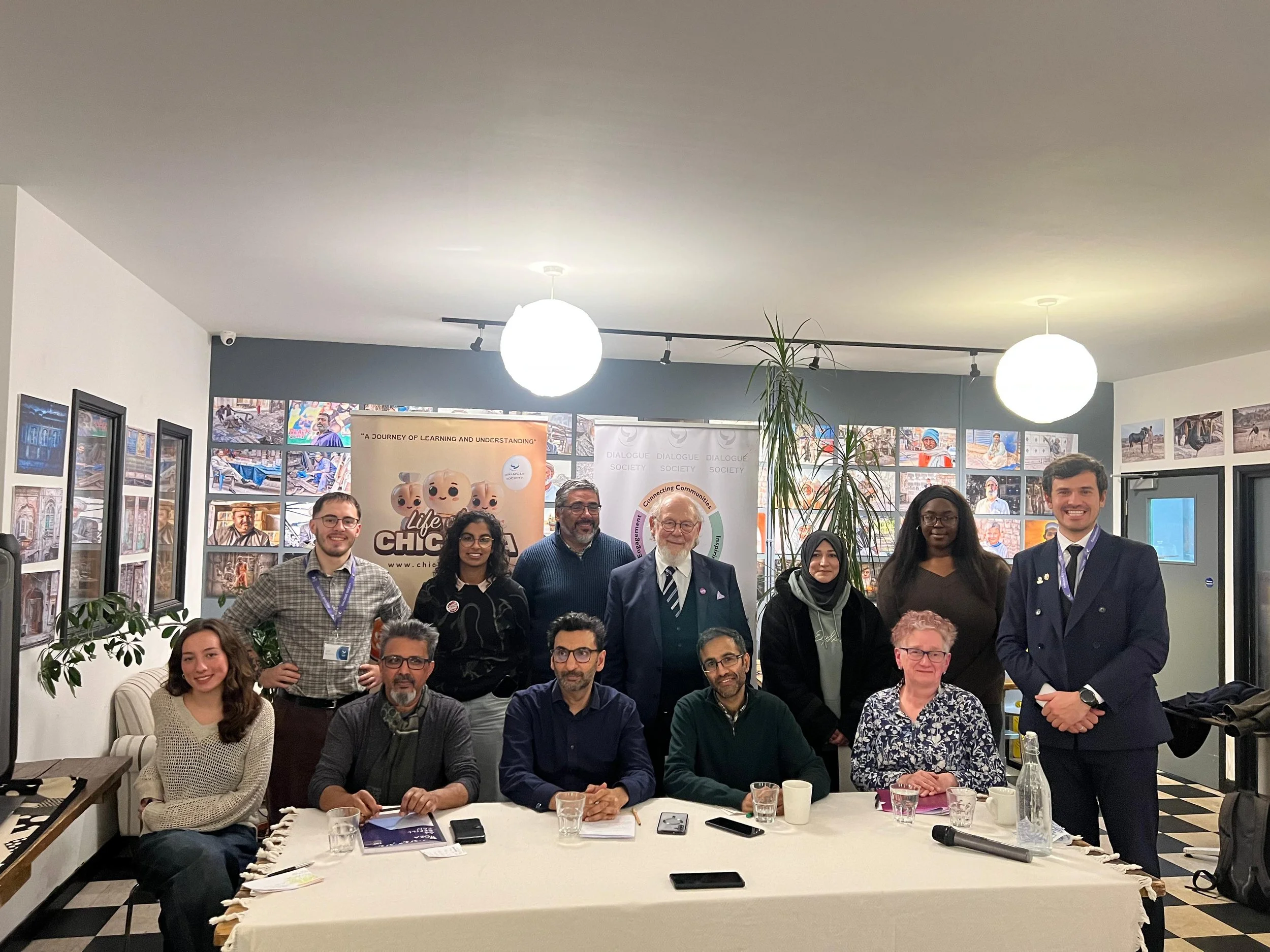
The conversation moved to discuss ‘progressive patriotism’, and what this could look like in our city. Panellist Mandy Ross, from the Birmingham Progressive Synagogue, argued that Birmingham’s diversity is its core strength, and we could build feelings of pride around inclusion. The panellists also considered how we have to create spaces for difficult conversations with the disenfranchised, and how there is still power in the idea of the working class.
The event finished with an impassioned Q&A. This is at the heart of Dialogue Society’s mission, as a charity committed to strengthening social cohesion by bringing people together across different backgrounds, beliefs, and perspectives. Topics included women’s movements, current global conflicts, the environmental crisis, and much more. The event became a network where attendees shared other organisations and events which address these themes.
Isla and Elliot, the academic volunteers from Dialogue Society, would like to extend thanks to BRIG, Mavens Art Club Collective, the panellists, and the attendees for making the event a success.