
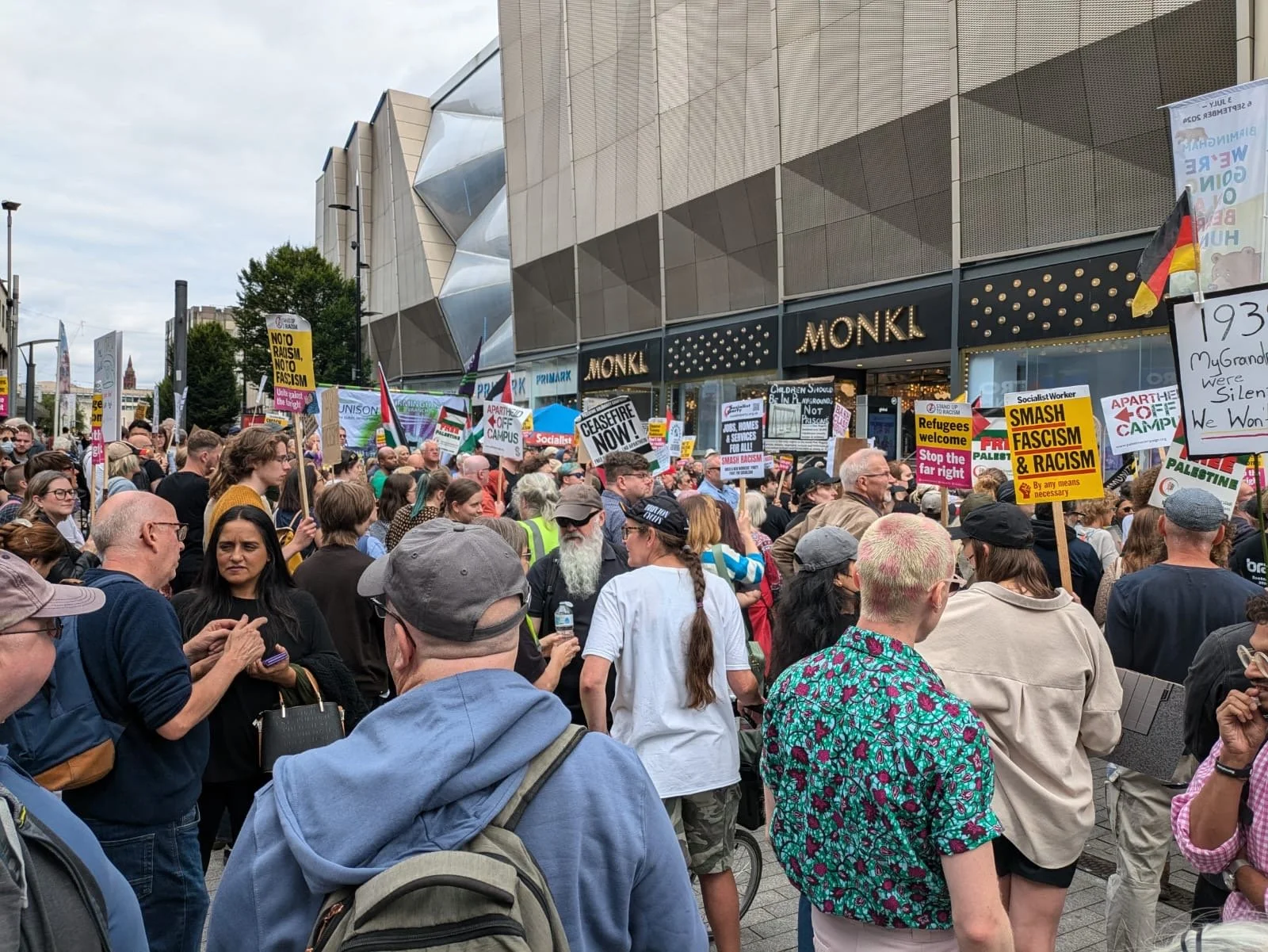
The recent resignation of the Chief Constable has once again raised serious questions about the robustness, transparency and public accountability of decision-making around the policing of public protests. In particular, communities continue to express concern that there remains no clear, publicly scrutinised framework governing how protests are policed while simultaneously safeguarding communities from racial and religious hatred.
These concerns were central to the multi-agency meeting held on 22 October 2025, convened following the Britain First rally in Victoria Square earlier this year. Community organisations made clear that the decision to allow the rally to proceed — despite Birmingham City Council’s stated “no platform” policy — represented a significant failure of joined-up working between the Council and West Midlands Police (WMP).
At the meeting, we raised serious and longstanding concerns about how Britain First were able to access Victoria Square, establish staging and infrastructure, and later march through some of the city’s busiest civic and commercial areas. While Birmingham City Council confirmed that access was not authorised and was the result of what it described as a serious security breach, there was no evidence of robust coordination with WMP either before or during the event to prevent or mitigate the harm caused.
Equally troubling was the admission that, despite the Leader of the Council publicly characterising the incident as a “major security breach”, the Council has refused to issue a public statement setting out what went wrong, what learning has taken place, and what procedures are now in place to ensure such a failure cannot happen again. Given the scale of community fear and the acknowledged seriousness of the breach, we believe this lack of transparency is unacceptable and risks further eroding trust.
Communities also highlighted the profound impact of the rally itself — including Islamophobic rhetoric, provocative symbolism, and the perception of unequal policing — all of which contributed to fear, anger and distress, particularly among racialised and faith communities. These impacts cannot be dismissed simply because legal thresholds were narrowly met.
We welcome the proposals discussed at the meeting to improve future coordination, including broader multi-agency discussions, stronger consideration of community impact, and better mechanisms for anticipatory planning. We also welcome the commitment expressed by the Police and Crime Commissioner to engage constructively going forward.
We look forward to working with the PCC, West Midlands Police and Birmingham City Council to ensure that future decision-making is transparent, coordinated, and rooted in the safeguarding of all our communities.
For full transparency, the minutes of the meeting are attached.
