
TedX Moseley: Racist Narratives in Local News West Midlands
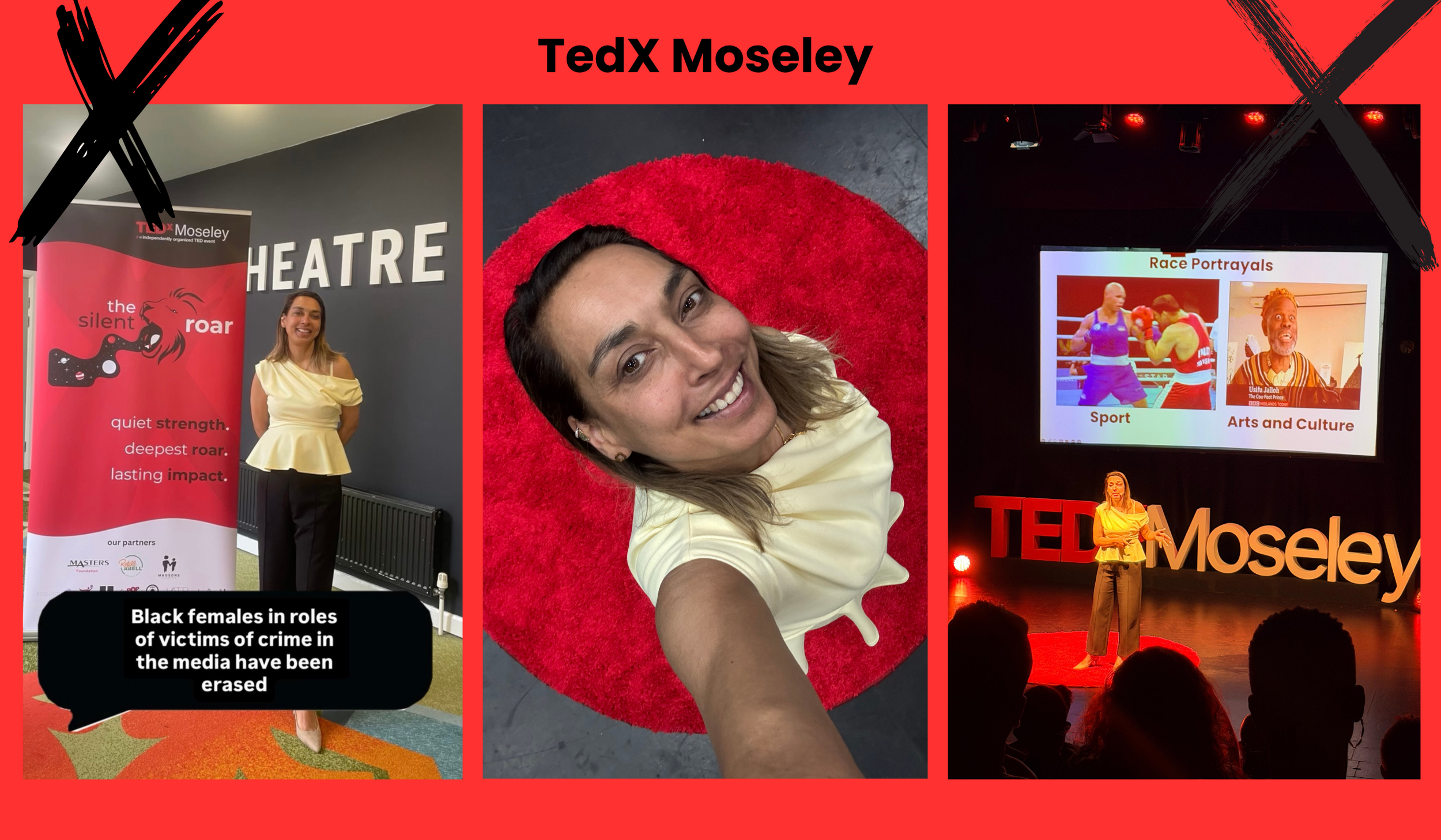
Nina Robinson gave her TedX Speech on racist narratives in local news onstage at the MAC.
As an award-winning journalist from Walsall and a woman of South Asian heritage, I’ve been privileged to work in newsrooms at local, national and international level, including a stint as a foreign correspondent in Kingston, Jamaica. For the past three years though, I’ve been dedicating my time to examining local news coverage of a TV newsroom in the West Midlands. What I found shows that despite decades of work highlighting the importance of challenging racist stereotypes and reflecting people of colour who live here, there is still a loooong way to go. This was the subject of my TedX speech on stage at the MAC, which will be published to 44.5 million subscribers on the TedX YouTube channel soon.
In total, I looked at 288 local TV news programmes and catalogued all the people who were being interviewed in news reports. This amounted to thousands of news and sports stories. Headline results did not at first glance, show any particular issues – for example around 80% of interviewees in these reports were white and around 18-20% were people of colour (PoC). This number reflects a national average rate of racial diversity in the UK. However, I argue that the ambition for racial representation should be greater for a place with population-dense towns and cities like Wolverhampton, Coventry and Birmingham, which register much higher national averages for racial diversity (35-51%).
Peeling back layers to uncover racial inequalities in local news coverage, I found that out of the interviewees who were experts – i.e. people who were professionals, managers, directors (and identified as such) gaps widened. Experts given a more prominent placing within the news programme in longer interviews responding to a top story were overwhelmingly white – 96%. This tells us that when it comes to the most important stories of the day, those go-to experts given a platform were not likely to be PoC. This shapes our understanding of who we are normalised to see as leaders and professionals.
I also measured news topic areas that PoC were most likely to be depicted in and found that stories which focused on PoC covered crime, arts/culture and sport (health was also a topic which came up in 2021). This differed from stories which focused on white people, where there was a more even spread across higher-status news topics like politics and business.
Examples of arts and culture framing for PoC included a graphic of a Balti curry for introducing a Commonwealth Games cultural festival and repeated depictions of PoC in ‘colourful’ costumes; think African grass skirts and lots of dancing. Such depictions of PoC are not new, a modern-day version of colonial portrayals; ‘trivialising’ and emphasising difference. Another example was a report on local football fans - who happened to be South Asian- shown in a staged scene of bhangra dancers and as corner shop workers. In contrast, a group of white football fans travelling to see a game at Wembley were introduced as patriots, family men and business owners who hired a South Asian driver, whom they called their ‘mascot.’
In coverage of the Birmingham Commonwealth Games (a bid won off the back of diversity), representative reporting was lacking. Stories which focused on white interviewees registered almost four times higher compared to stories which focused on PoC.
The only area of the counts where there was equality of coverage was in the depiction of criminals, where stories were reported in 2-3 short sentences, without explanatory context; a Black or Brown face as a mugshot or in a name attached to a crime. White people were much more likely to be shown as victims and as upholders of law and order. Double the incidence of white people shown as crime victims compared to PoC. Black female victims of crime were virtually invisible, with numbers so low as to constitute an erasure of their experiences, which has implications for who, as a society, we feel is deserving of protection and empathy.
I’m working on the book, which details lots of other findings so follow me on linkedin @ninarobinson01 and @soundtruism for updates.