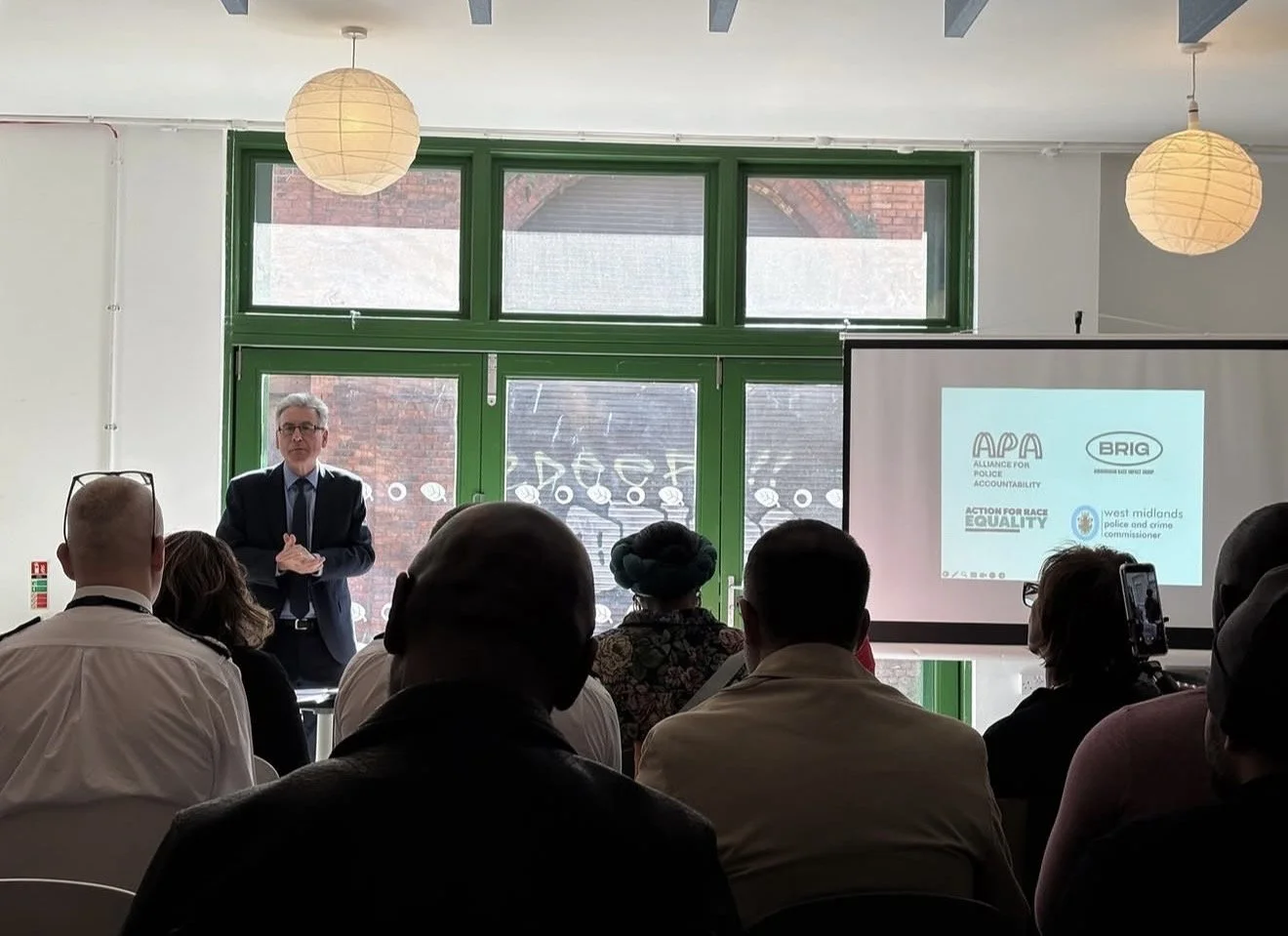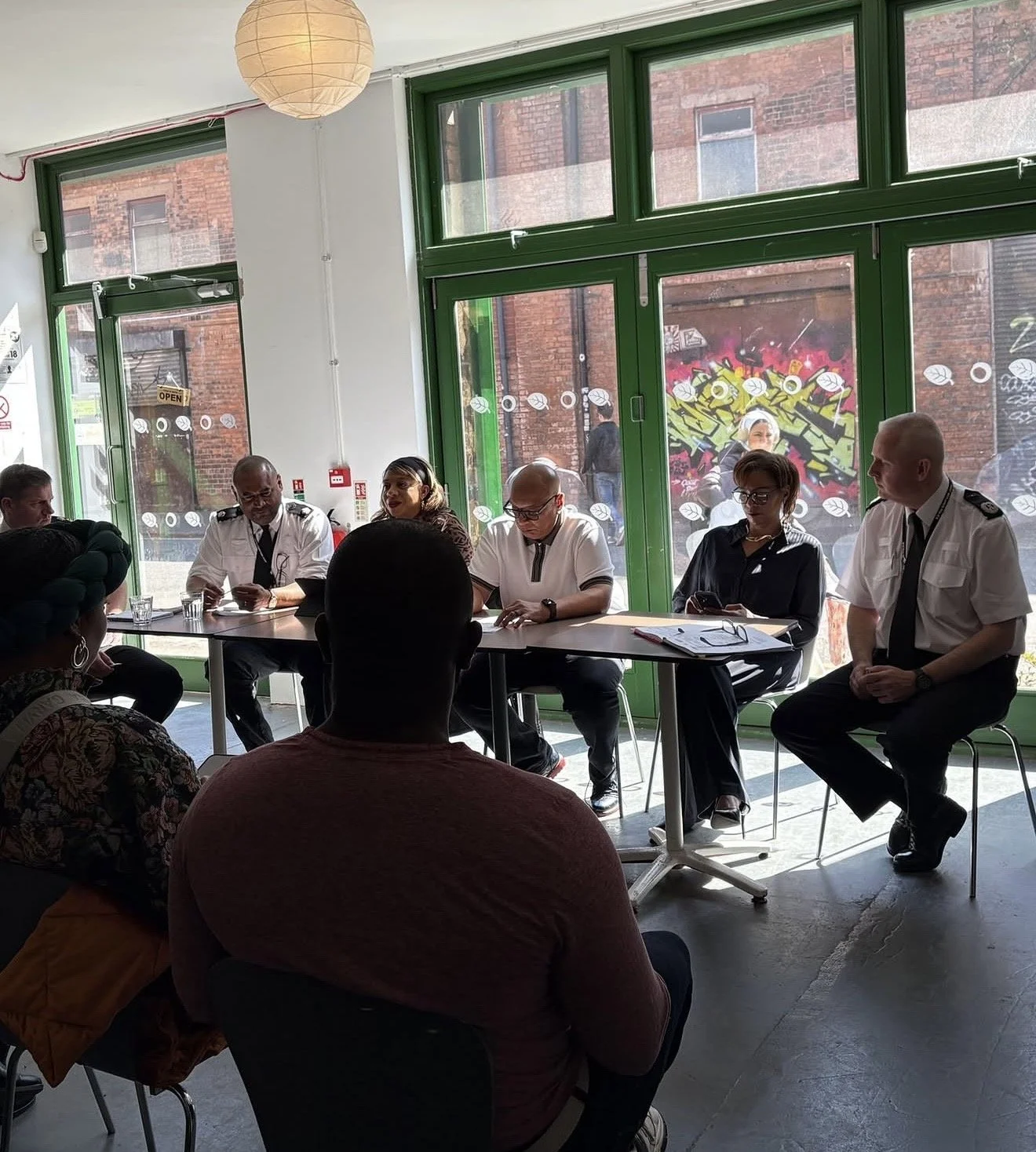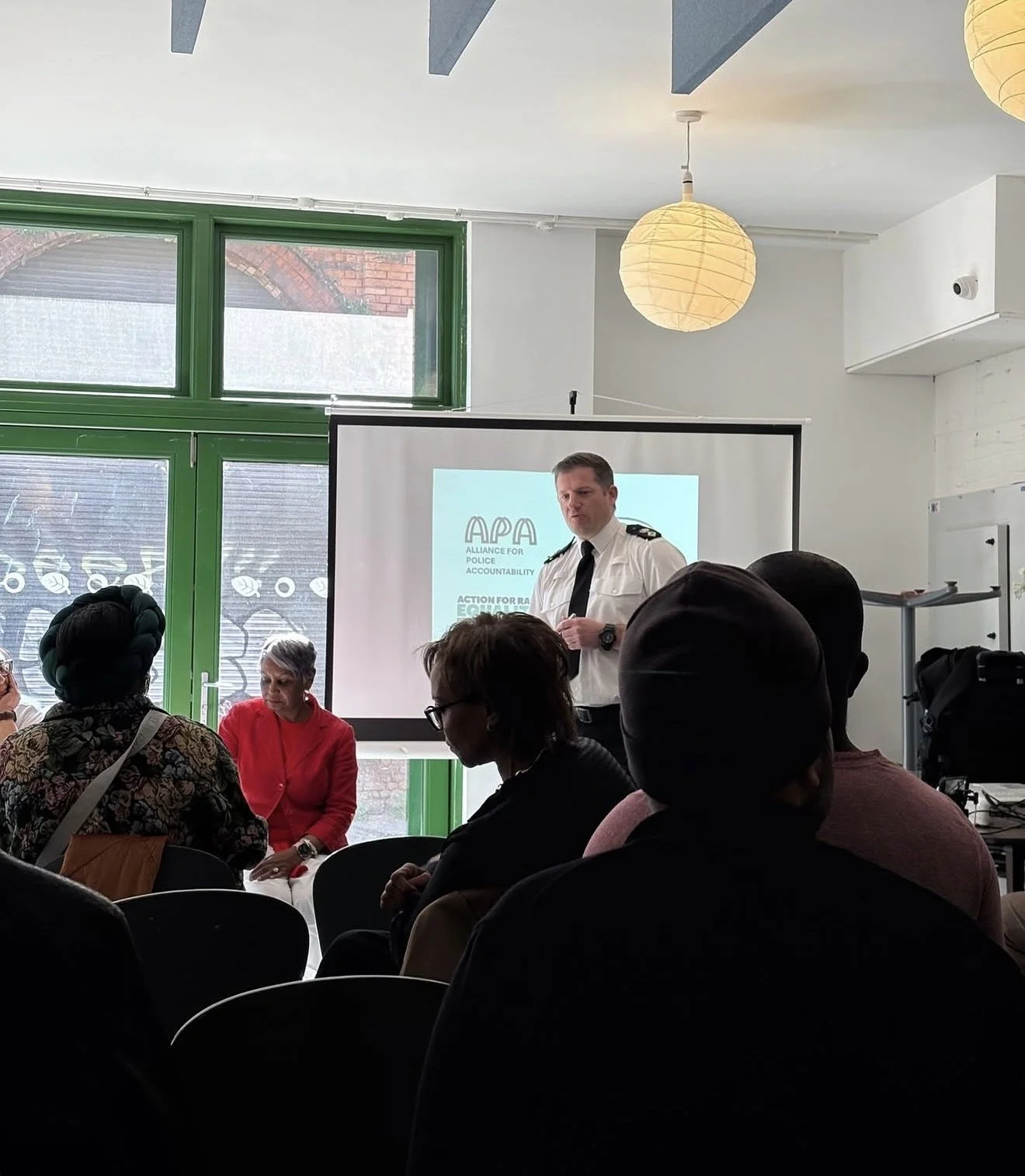
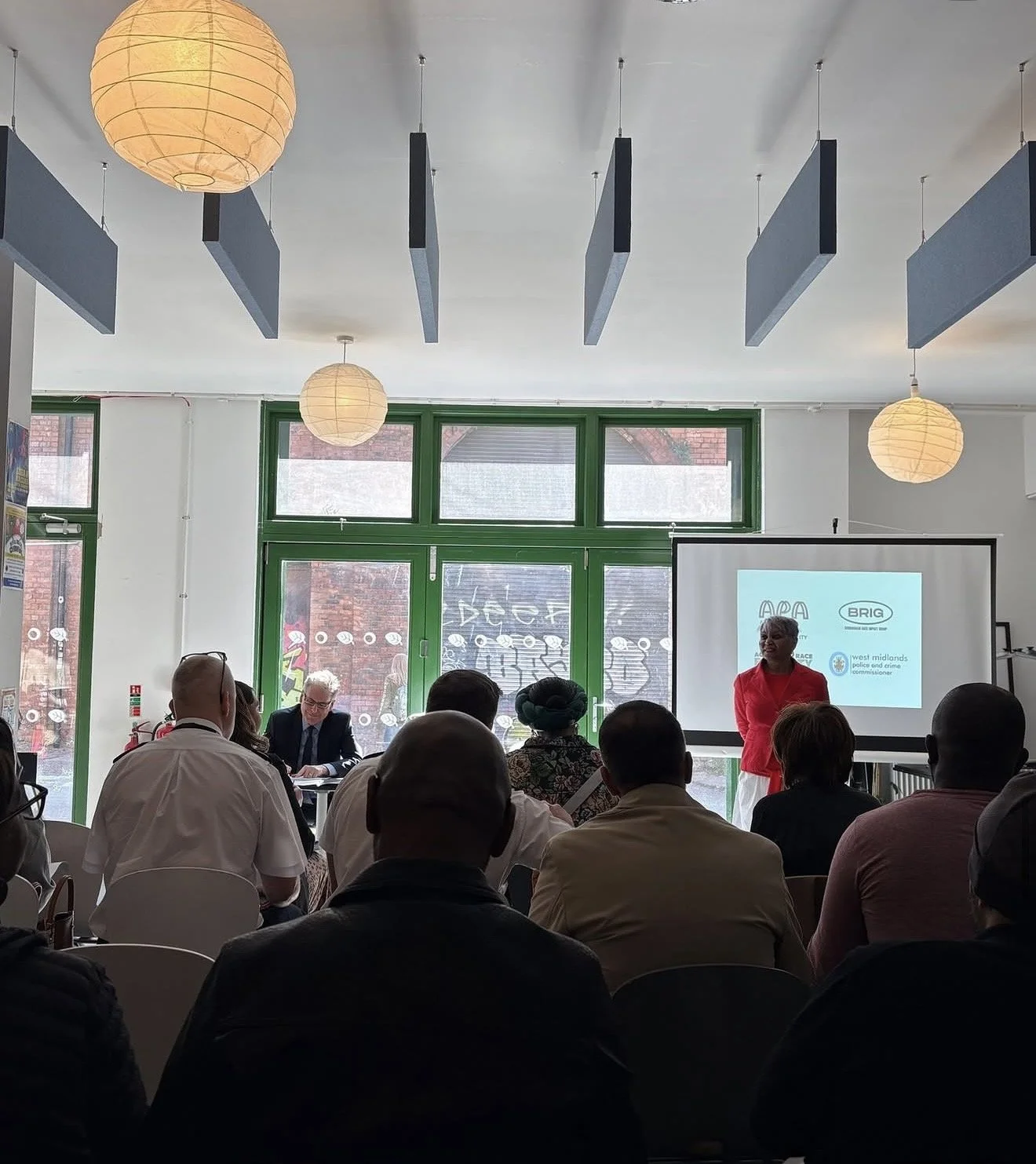
The initial gathering was not about finding immediate answers, but about listening and creating space for honest conversations. Community members shared their lived experiences, raised concerns about trust, transparency and accountability, and expressed their hopes for meaningful change. Police representatives also reflected openly on the challenges raised and the experiences shared during the discussion.
The Charter aims to move beyond consultation by ensuring that Black communities have a meaningful voice in shaping policing priorities and decision-making. Its three core ambitions are to strengthen community influence, improve cultural understanding and establish clear systems of accountability.
Following the initial gathering, the first Birmingham Black Policing Charter Steering Group meeting took place on 21 May 2026, marking another step in the Charter's development and bringing together those committed to shaping its future.
The development of the Charter continues to emphasise community engagement, collaboration and shared responsibility, with young people, community leaders and local organisations playing an important role in shaping its direction.
As one of four national pilot areas, Birmingham has an opportunity to help shape a framework for improving relationships between Black communities and policing, with the potential to inform wider change across England.
Black Policing Charter
On Wednesday 22 April 2026, Stephen Lawrence Day, community members gathered at the BRIG Café for the early stages of an important initiative—the Birmingham Black Policing Charter.
Hosted by Lee Jasper (Alliance for Police Accountability) and Lorna Shaw (BRIG), the session brought together residents, West Midlands Police, and representatives from the Police and Crime Commissioner’s Office to begin an open and honest conversation about trust, accountability, and policing.
The Birmingham Black Policing Charter is one of four national pilot Charters being developed across England, designed to strengthen trust, accountability, and understanding between Black communities and policing. Developed in partnership with Birmingham Race Impact Group (BRIG), the Alliance for Police Accountability (APA), Action for Race Equality (ARE), and the Office of the Police and Crime Commissioner (OPCC), the Charter seeks to address longstanding concerns around policing and create a framework for meaningful, long-term change.
At the heart of the initiative is an important question: What does policing with the consent of the Black community look like?