
“There’s no point writing a history of racism and resistance when it’s staring you in the face, and we do nothing about it. What’s the purpose of writing? Is it just to preserve the history or is it to act on the lessons of history?”
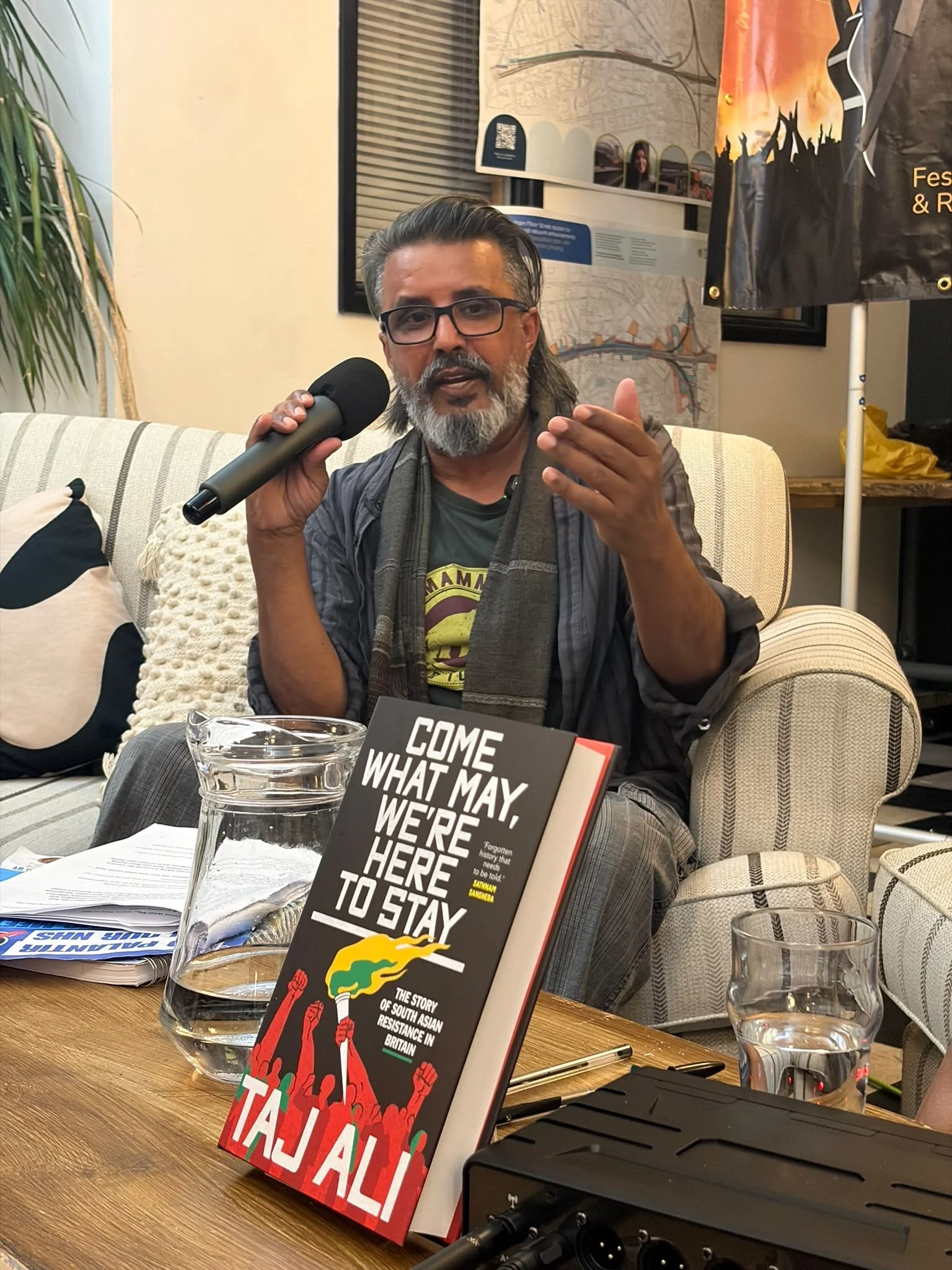
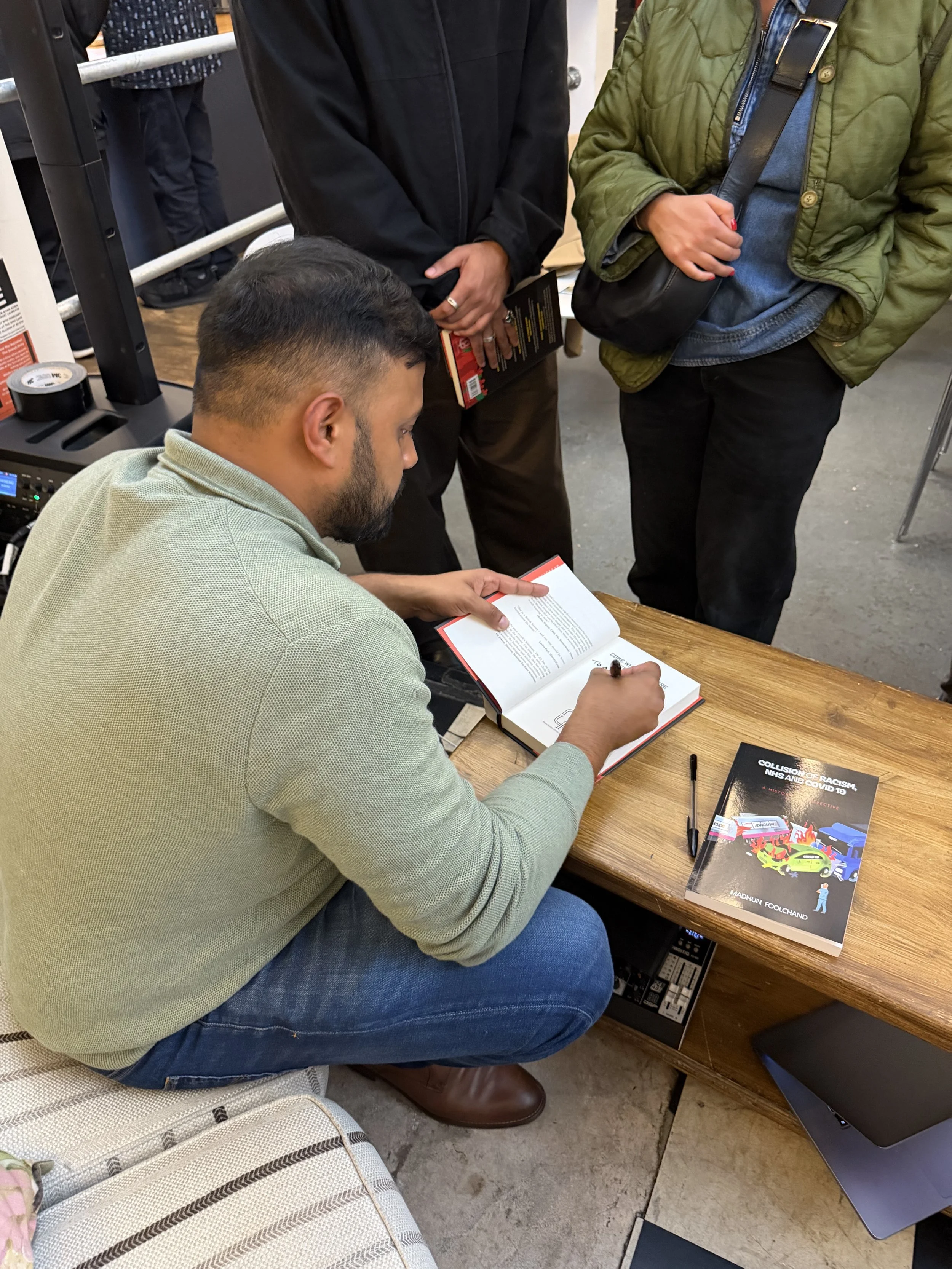
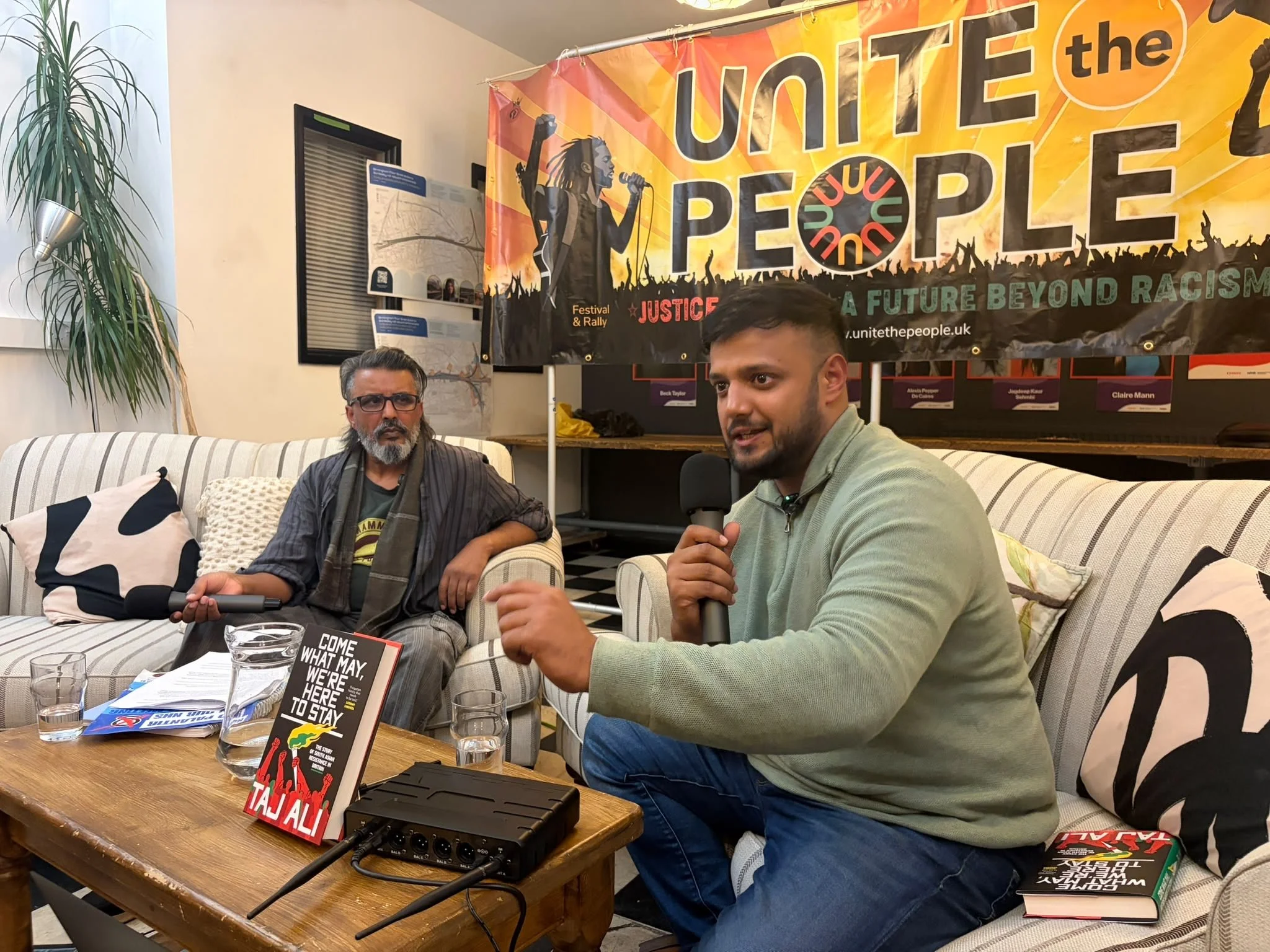
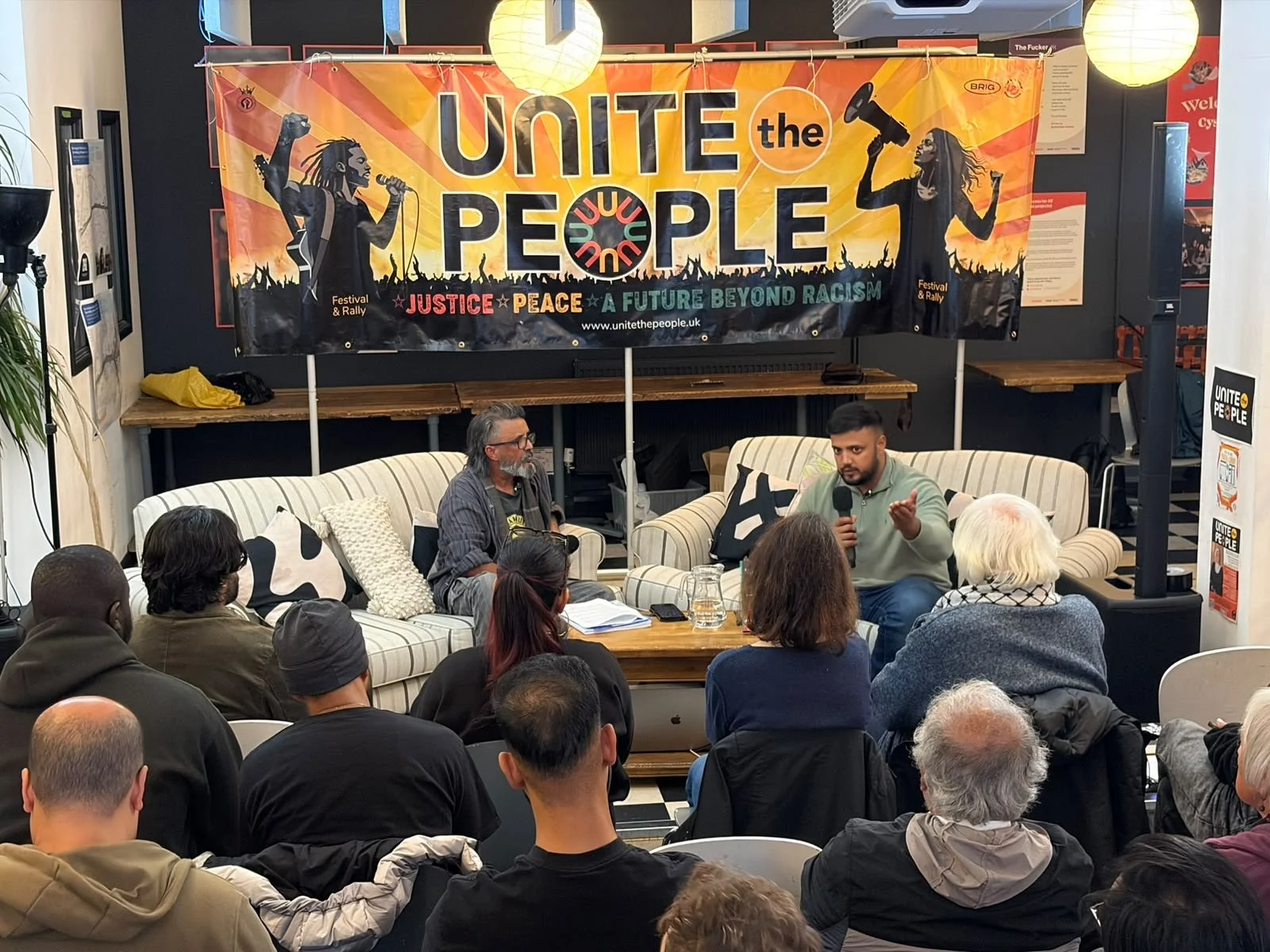
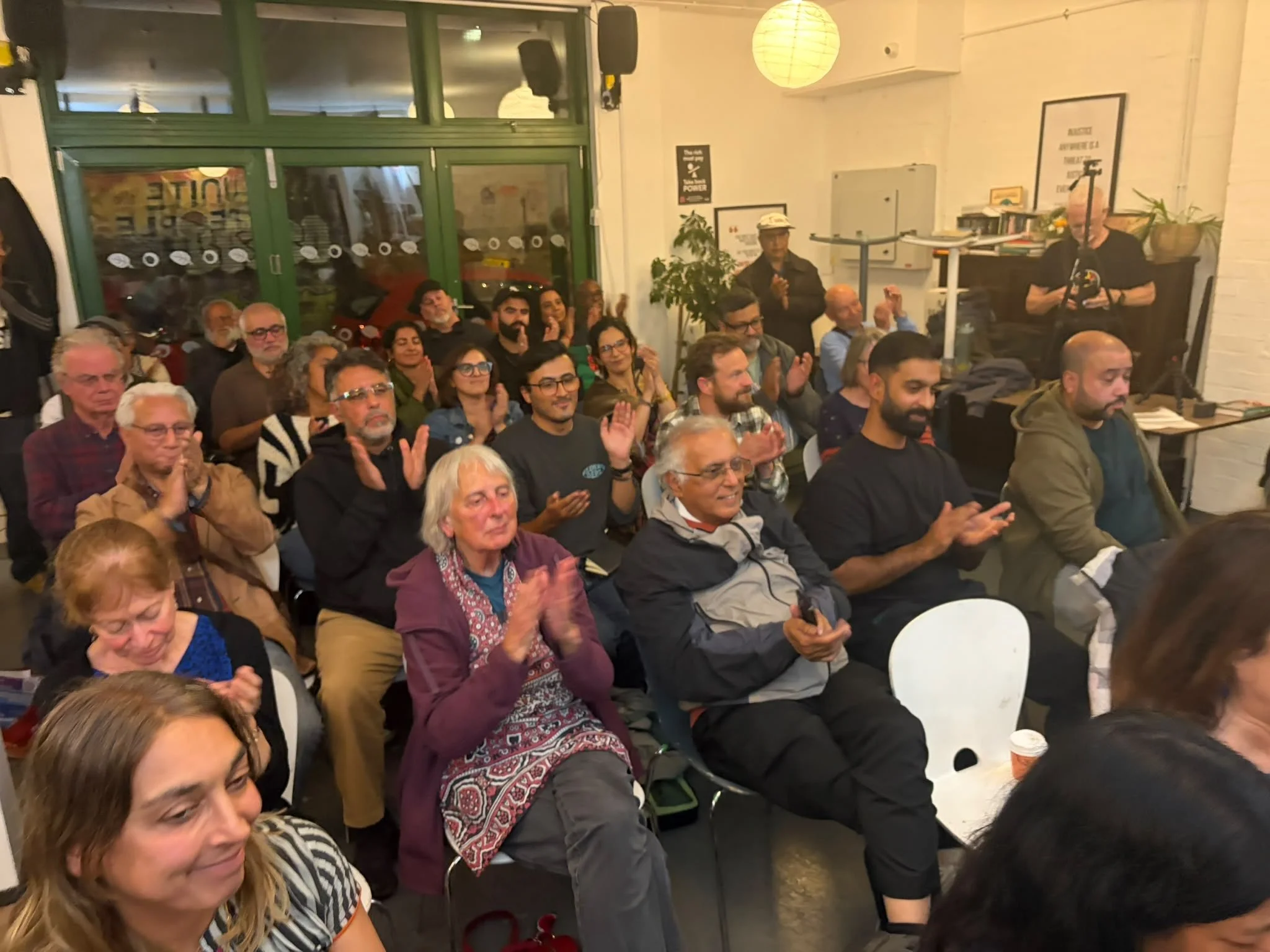
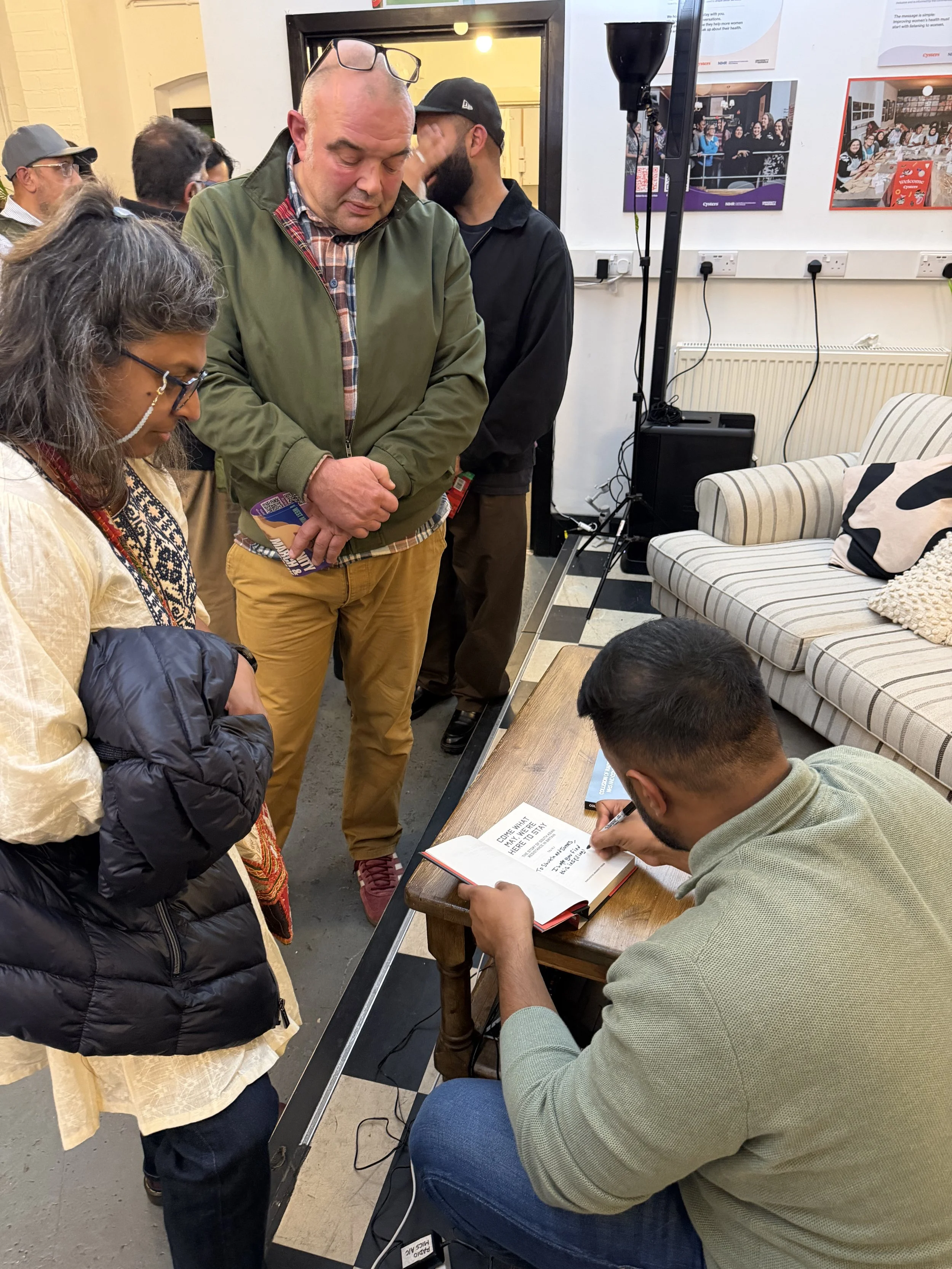
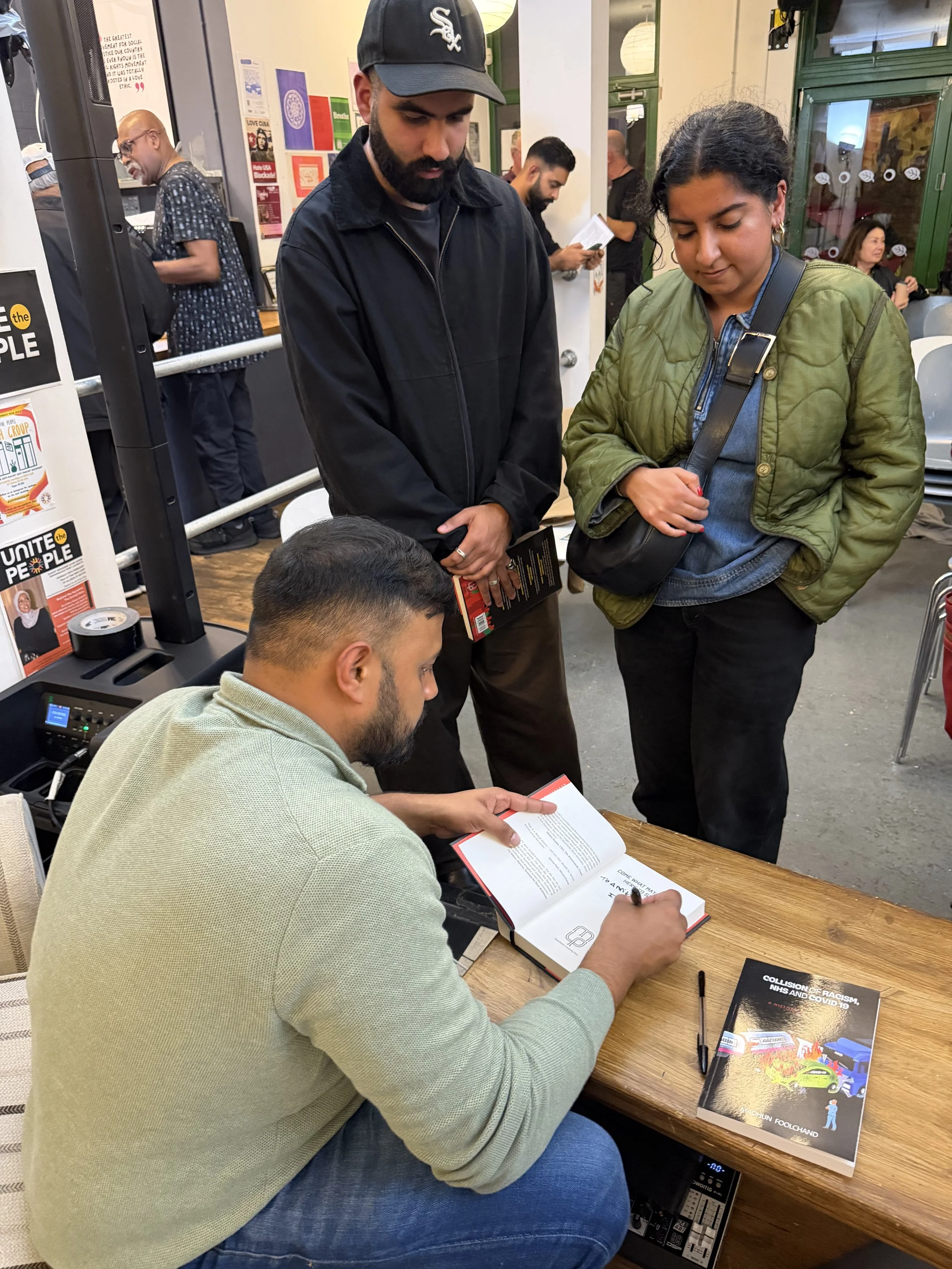
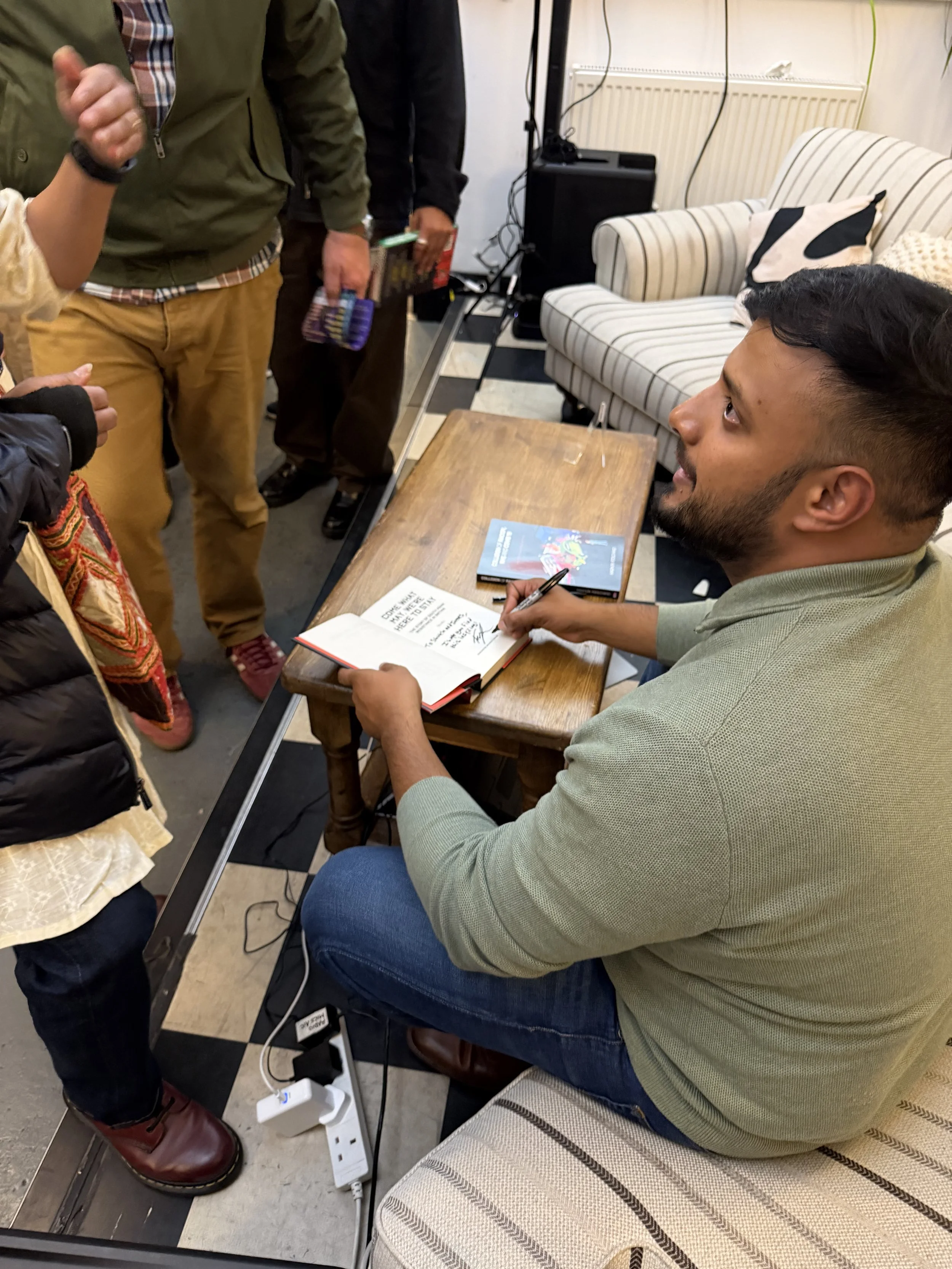
It’s an autumn Sunday evening at the BRIG Café at The Warehouse, and the space is buzzing for the Birmingham launch of Taj Ali’s debut book, Come What May, We’re Here to Stay: The Story of South Asian Resistance in Britain.
The event, presented by Unite the People and the Asian Anti-Racist Alliance, hosted by Mukhtar Dar, brought together two generations of anti-racist organising. Mukhtar was just 21 when he helped found Sheffield’s Asian Youth Movement in the 1980s. Taj is 28 and an activist, historian and journalist continuing that tradition of organising while documenting the history of those who came before him.
What follows are edited extracts from their conversation, covering South Asian resistance in Britain, the history of grassroots organising, the rise of the far right, the lessons that history might hold for today and the challenges facing a new generation of anti-racist organisers.
“I went to a school that was 99% Black and Asian. There was only one white person in my entire year group. Even he was Irish. So, it was very much Tommy Robinson’s worst nightmare.”
Mukhtar: Luton is a town that's become synonymous with the rise of the English Defence League, and Tommy Robinson. What was it like growing up there?
Taj: Firstly, thank you, everyone, for coming to the book launch in Birmingham. Thank you, Mukhtar, for organising this event alongside others. You obviously lived the history. I've only attempted to document the history.
Luton's very similar to Birmingham. It's a diverse working-class town. It once had thriving industries.
In the 60s it was described as a boom town. Vauxhall, the factory, employed tens of thousands of people. My granddad worked on the assembly line in the 60s, and of course, we were impacted by deindustrialisation.
I remember at the age of 12, one of my teachers said to me, you shouldn't go into the town centre because the English Defence League is in town. So, as a British Pakistani Muslim from a very early age, we are grappling with questions of identity and belonging. What is the English Defence League? What are they defending? What does far right mean?
That led me to ask questions of my father, who grew up in Luton in the 70s and 80s, where there were certain roads, I'm sure it was the same in Birmingham, that you couldn't walk through as a Black or Asian person because the racist violence was that bad.
He lived one road away from the football ground. The Chelsea fans and the Millwall fans would regularly smash up people's windows and target the mosques. He was humiliated by his own schoolteachers with racist taunts. There were lots of fights in the playground, and he had to defend himself, like everyone else.
The police were of very little help. People would report racism, and often the police were complicit in the racism. There was housing discrimination - 20 people in a three-bedroom house. They would take turns on the mattresses. They worked long hours in the factories where there was no basic dignity and respect. There was racism within the trade unions as well. So, he educated me on his experience.
He wasn't an activist, he wasn't in any formal organisation. He was just a young man trying to defend himself and trying to live a life of dignity.
“We weren't simply passive victims of history.”
I went to university, and I studied a module on race, ethnicity and migration, and we learnt lots about the Anti-Nazi League, about Rock against Racism, about white-led anti-racist movements. But I knew there was more to the story than that because I'd heard this from my elders.
That led me to speak to people like Fahim and others (* Fahim Qureshi helped set up the Luton Youth Movement in the early 80s) and understand the history of organising within our communities because we weren't simply passive victims of history. We experienced racism and colonialism and workplace discrimination, but we also had agency and we shaped this country as well.
I initially set about recording these stories because many of these activists were getting old and few people were recording the stories. This was oral history in working-class communities.
I felt there was an urgent task to just document the history and preserve it, but then we see what's been happening over the last few years, with racism on the rise. In 2024 I was barely sleeping during those riots. It's the worst racist rioting in living memory, and it might not have impacted so many people in Birmingham, but if you were a Muslim in Sunderland or parts of Essex or Liverpool, people were frightened.
I spoke to a Muslim woman who was having panic attacks - there were real fears. There were people in the communities who took a whole week off work, who no longer went on walks to their favourite parks. Since those riots, racism has exploded in all of these places. A mosque in Britain is attacked every five days. (*British Muslim Trust 2026 - government partner for monitoring anti-Muslim hatred)
There's a whole generation trying to make sense of this experience, and there's a lot of hopelessness – ‘things are going to get worse, we're going to get sent back’. And Come What May We're Here To Stay was the rallying cry of the anti-racist movements. It was a defiant call which said we're not going anywhere; we're going to organise and defend our communities.
My experience has been shaped both by class and race. And the reason I write this story is that I want the younger generation in particular to understand our history. To understand how we fought back against racism in the past and how we confront it in the present.
“Journalism is one of the most socially exclusive professions in Britain…I always felt I had a purpose and a role to play in journalism.”
Mukhtar: What's your background and where did your family come from? And why did you choose to go into journalism?
Taj: So, I come from Mirpur, Azad Kashmir, and we come from working-class backgrounds. We're from rural farming communities.
There's very little education in the villages, and of course we're here because the British were there, as Sivanandan said – ‘we are here because you were there’. Our history's tied to the British Empire. My granddad worked in the Vauxhall factory; my dad worked in the Vauxhall factory. He was made redundant in 2002 and, like lots of former factory workers in the South Asian community, became a taxi driver.
I studied history and politics because I was interested in the subject. I had no idea what career I would end up in. I don't actually have a journalism qualification.
I left university in the middle of COVID during the pandemic, and I was working in a factory actually, 12-hour night shifts because it was so hard to find a graduate job at that point. I started writing opinion pieces on Islamophobia and class, and it was through that method I got into journalism, and it's quite an unorthodox method.
Journalism is one of the most socially exclusive professions in Britain. It's full of people from very privileged backgrounds who do not understand working-class communities, and so I always felt I had a purpose and a role to play in journalism.
I was always interested in the stories of South Asian working-class communities specifically. I saw the class divide at university. When I was a kid, nobody really spoke about class. It was very different from the 70s and 80s, when you had a strong trade union movement. People felt proud to be part of the working class. There was a sense of pride and power. As the trade union movement declined, there was a lack of manufacturing jobs, and poverty was something to be embarrassed of. Everyone was trying to escape the poverty. There was all this rhetoric around social mobility, escaping your class background.
It was all about individuals rather than the collectives. And one thing I've always been keen on is talking about the collectives and talking about how we unite our communities.
Yes, I write on South Asian history, but this is also about uniting working-class communities. As you know, Mukhtar, through your own organising, that was always a central purpose of the Asian Youth Movements.
“Our activism and organising didn't begin with the second generation - this is something that's often misunderstood.”
Mukhtar: You met and talked to members of the Asian Youth Movements, and you go back, not just to postwar migration, but even further. How did you go about writing the book and why did you decide to write it?
Taj: Well, it was for two purposes. One was to preserve the history, and the other was to inspire the younger generation. But this is also British history, and I wanted non-Asian people to understand our presence in Britain. Britain colonised a quarter of the planet. The British Industrial Revolution was powered by colonialism.
I started off talking about the 1970s and 80s, but I ended up going back over 400 years of South Asian presence in Britain. It's important to recognise where we come from and how we ended up here. When Britain took resources from the Indian subcontinent and other countries, they didn't just take the goods; they also relied on the labour.
One forgotten history is that of the South Asian seafarers known as the Lascars. Many of them were working in 40-degree heat, shovelling coal in the engine rooms to power the ships, because there was a colonial stereotype that South Asians could handle the heat. Many died on those boats; some of them jumped overboard because they were tortured by the captains.
There is this horrible history of South Asians being exploited, but there's also a history of resistance, even back then.
In 1901, a South Asian crew heading to Dundee were mistreated by a captain. They refused to move the ship, and they were put in chains. When they arrived at Dundee, they held a protest to complain about their conditions. In the 1920s, you had the rise of the Indian Seamen's Union, trying to recruit Lascars in port cities like Liverpool, Cardiff and South Shields - these were some of the earliest multicultural communities in Britain.
In the 1930s, you had the Colonial Seamen's Association, you had the Indian Workers Association set up in Coventry. In 1939, on the eve of the Second World War, there were global strikes, including in British ports, where South Asians went on strike for a war bonus, and they won.
So, one of the other stories I wanted to tell in the book was the fact that we've been here for 400 years. Our history didn't begin after the Second World War. There are all these stories and histories of South Asian resistance. Our activism and organising didn't begin with the second generation. This is something that's often misunderstood: that our elders kept their heads down - no, some of them were radicals as well.
There's a house in Highgate, North London, called India House. In 1905, it was seen as a student residence. It was a hub of Indian revolutionaries. Their newspapers were being printed in New York by Irish papers, and they had this international connection in 1905.
The reason I know all of this history is that they were spied on by the British. If you go to the British Library, they have the India Office records, where they have thick folders with lots of details about the South Asian students. Because of the rise of communism and the Russian Revolution, they started to worry that if these guys embrace those ideas, maybe we're going to lose the empire. So ironically, it's the British state surveillance that's helped me do the research, and I mean, they spied on the table tennis between Indian and Irish students. It was incredible.
There’s so much history of South Asian resistance in this country, and so this is a snapshot. I couldn't include everything. I tried my best to find the most interesting examples of South Asians organising.
“I relied on lots of oral history interviews with people like yourself, Mukhtar. Sadly, some of these people passed away.”
I never got a chance to speak to Anwar Ditta, and she was a fantastic anti-deportation activist. In 1979, she was told by the Home Office that her Pakistan-born children were not hers, and she fought a family reunification campaign. She spoke at over 400 public meetings in two years.
She was born in Birmingham; she grew up in Rochdale - a working-class, South Asian woman. She brought other South Asian women to the front when the TV cameras were on her because she wanted to highlight their campaigns as well.
There are so many people out there. There are probably people whose stories I haven't even found, whose histories of resistance have been unrecognised for too long.
“Nobody’s ever sat me down and asked me about my life - there was no interest in what we went through as young people, as young South Asians.”
Mukhtar: I remember in the 70s when I was going to school in Sheffield, in the history lessons there was nothing about us. They used to show black and white documentary films of Asian, African, and African Caribbean people living in huts. The white kids in the classroom would ridicule us, laugh at us. So, we were seen as people without history.
When we later formed the Sheffield Asian Youth Movement, we were hungry for books. We used to go to the library, and if we ever found a book that was of interest, we would share it. We would record Malcolm X tapes on ghetto blasters and pass them around.
We sat with elders from whom we learnt about the history of resistance. That rich, glorious history of resistance against colonialism is something that we got from them. So, it's really important Taj, that history has been put down in the book.
When you spoke to these people, is there any particular interview or person that comes to mind that really moved you?
Taj: Well, when I interviewed you talking about these campaigns, you were very emotional remembering them.
I think it's worth remembering that a lot of elders went through such hardships that many of them don't want to talk about it. They almost lock it away. There’s a lot of trauma and emotion.
I was in Glasgow for a book launch, and I met Mohammed Ikram, who is a member of the Luton Youth Movement. I met him after interviewing him all those years ago, and he said, “You know what, nobody ever sat me down and asked me about my life. There was no interest in what we went through as young people, as young South Asians”.
“I often think about people who've gone through all of that and are still fighting the fight - I think that should inspire the younger generation.”
I guess the other individual would be Suresh Grover. Suresh, as a young man, was stabbed by racists in Nelson in the 60s. The man who stabbed him would walk past his house and the police didn't do anything. He moved to Southall in the 70s.
This year marks 50 years since the racist murder of Gurdeep Singh Chagger – a young engineering student who was killed by racists when he was 18 years old. The day after his murder, Suresh Grover was walking down the High Street in Southall, and he saw a pool of blood. A police officer was gesturing for people to walk past it, and he said, “What has happened here, officer?” The officer replied, “Go away, it's just Indian blood.”
That was the attitude of the police. He wrote in chalk: “This racist murder will be avenged. We will get you racist scum.” That led to the emergence of the Southall Youth Movement – young South Asians who physically organised the defence of their communities.
The reason I highlight Suresh is that he's still fighting the fight.
He did lots with the Southall Black Sisters as well. He set up the monitoring group, and he goes around the country supporting victims of racist hate crime and people who've been unjustly treated by the police.
I think that's inspiring for me - to know that this was a young man, like my father, racially abused by his teachers, dealing with racism all the time, and he's sacrificed so much for the anti-racist cause.
I think that should inspire the younger generation, particularly those of us who don't have to constantly watch over our shoulders on our streets, to think about how we should be supporting others as well.
“It's never about the individuals. It's always about the masses.”
Mukhtar: There are very few books that are about the history of South Asian resistance. Most of the books people have on their coffee tables are about representation; they’re about that we migrated, that we settled, that we opened up corner shops…So why do you think that history of resistance is important?
Taj: I think it's important to recognise what went wrong as well, so why we don’t have the Asian Youth Movements in 2026.
After the 1981 riots, the government pursued a policy of state multiculturalism, putting money into poor, diverse inner-city areas. Money was being allocated, communities were bidding against each other, and they were becoming divided along these lines.
It wasn't a perfect history. There were big problems - sexism, egos, and sectarianism back then, but there was far more unity between people of different communities. There weren’t as many racial and religious divides. People were coming together, and that's, I think, a key lesson from the history.
Since the 80s, we've moved from independent, grassroots anti-racist organisations, rooted in their communities and not dependent on the state, to the rise of the community leader framework. Suddenly you have community leaders who speak on behalf of the entire community. Who elects a community leader? How do you define a community leader? Why is it always a man, and how can they speak on behalf of communities that were never monoliths?
So, we've gone from collective, grassroots, anti-racist movements, where you organised as Asians and as working-class people, to individuals. I think that's a problem.
We talk about the few individuals who have become rich businessmen or politicians. You can see some of the brown politicians we have in this country and what they've actually done for anti-racism, if anything. Representational politics was never in our history. We were always opposed to it. There was much borrowed from the Irish in the anti-colonial struggle, and much from the Black Power movement. There was solidarity with the miners. We were always learning from other communities.
Where we are today, we have become siloed. Class is important, race is important, gender is important - all of these things are important, but we're not organising together. We're all separated out into our specific areas, different religions and races, and I think this is a huge problem that we need to think about - how we solve it. There’s a lesson from history – people couldn’t afford to be divided.
“We live and grieve the struggles we talk about, and I think that's important.”
Mukhtar: We've seen you on Newsnight and we’ve also we've seen you on the front line at demonstrations. As a journalist, a historian and an activist - how do you balance all of that?
Taj: I never went into journalism trying to be something I'm not. I know where I'm from; I know what my background is. Sometimes you have to speak your mind. It might mean that you're not in the club, but why would you want to be in that club in the first place?
They don't understand what it means when your mum tells you she has been racially abused and how that must feel.
We live and grieve the struggles we talk about, and I think that's important. Anyone can write the history, anyone can talk about it. But when you have a direct connection in the communities, that's a different thing.
It is hard sometimes trying to balance doing your day job as a journalist and also being the activist. But I think it's something that I really believe in deep down. I really believe in anti-racism. I really believe in the self-defence of our communities.
One of the privileges of being a journalist is that you get to travel across the country. You get to hear stories from people from all walks of life and go back to your community and share that message. After the riots of 2024, I was telling some of my friends what had happened in Middlesborough; some of them didn't even know there were riots because they live so comfortably in Luton.
I think now people are starting to wake up. They're seeing it on Instagram; they're seeing clips of people being racially abused, but they're looking for direction and guidance. And if those of us who are familiar with the history don't provide that, then what are we doing?
There's no point writing a history of racism and resistance when it's staring you in the face, we're dealing with it in the present, and we do nothing about it.
“Just as they can spread hate from their bedrooms, there are people that can monitor them in the same way.”
Mukhtar: When you look back on that history that you've been uncovering, it was a different time, but it seems in some ways to be a lot worse now. There's a younger generation with new technologies; are there any new methods that we should adopt in terms of organising?
Taj: Well, I certainly think the far right has new methods. Let's compare the National Front to Tommy Robinson. The National Front would openly say they're racist. They were proud to be racist. Tommy Robinson always tries to push this multicultural far-right: “I don't mind the Sikhs; they were in the army; I don't mind the West Indians”. It's the Muslims. It's a specific target, and it's provided mainstream media legitimacy, so it's becoming increasingly mainstreamed.
In the 70s and 80s, if the National Front came to Birmingham to sell a newspaper, the anti-fascists would say We don't want you to spread your propaganda - no platform. Today they can spread hate on mobile phones. You don't even have to leave your bedroom. You just get the algorithm, and you're given so much hate, so much disinformation.
We are seeing an increase in neo-Nazi plots being uncovered, and people spending all day in their bedrooms believing all the lies, misinformation, and then acting on it. That's what's driving all of these recent hate crimes. It is that radicalisation.
A lot of it does take place online, not in person. So, I think we need to recognise what is happening online. The thing about social media and media in general, especially at the moment, it's driven by click-based sensationalism. There is no nuance; everything's black and white, and I think we are the people who believe in nuance. We've always said we are neither all saints nor all sinners; treat us as individuals. We’re no different from any other community. We can have problems in our communities, and we should address those problems, but don't judge us the same way.
I've always believed that, in order to tackle these guys, it has to be the in-person stuff; it has to be the door knocking, and it's not easy because there are some people that you can't win over. There are some people with so much hatred in their hearts that you have to learn how to defend yourselves from them. There are others that can be won over.
As an industrial correspondent, I met a firefighter who grew up in a racist household, and he said, “I'm so ashamed of what I used to think”. I said Don't feel shame; feel like you can do something because you're from a predominantly white working-class community in the East Midlands, where we're seeing a rise in the far right. You are a better message carrier than I am. You know your community. You can have that conversation with them.
So, I think it's important to recognise the allies we have in our communities. Many white working-class people have lived with Black and Asian people for decades who are solid anti-racists. We cannot allow people like Tommy Robinson to claim they speak on behalf of the white working class, because they don't. I know this because I live in a town with many white working-class people who are on the front line against the EDL.
We have to build bridges between different communities and recognise that everyone has a role to play.
“It wasn't the government. It wasn't an act of parliament. It wasn't an NGO. It was people.”
Mukhtar: You've been on a tour up and down the country and talking to people. How has the book been received and what conversations have you been having?
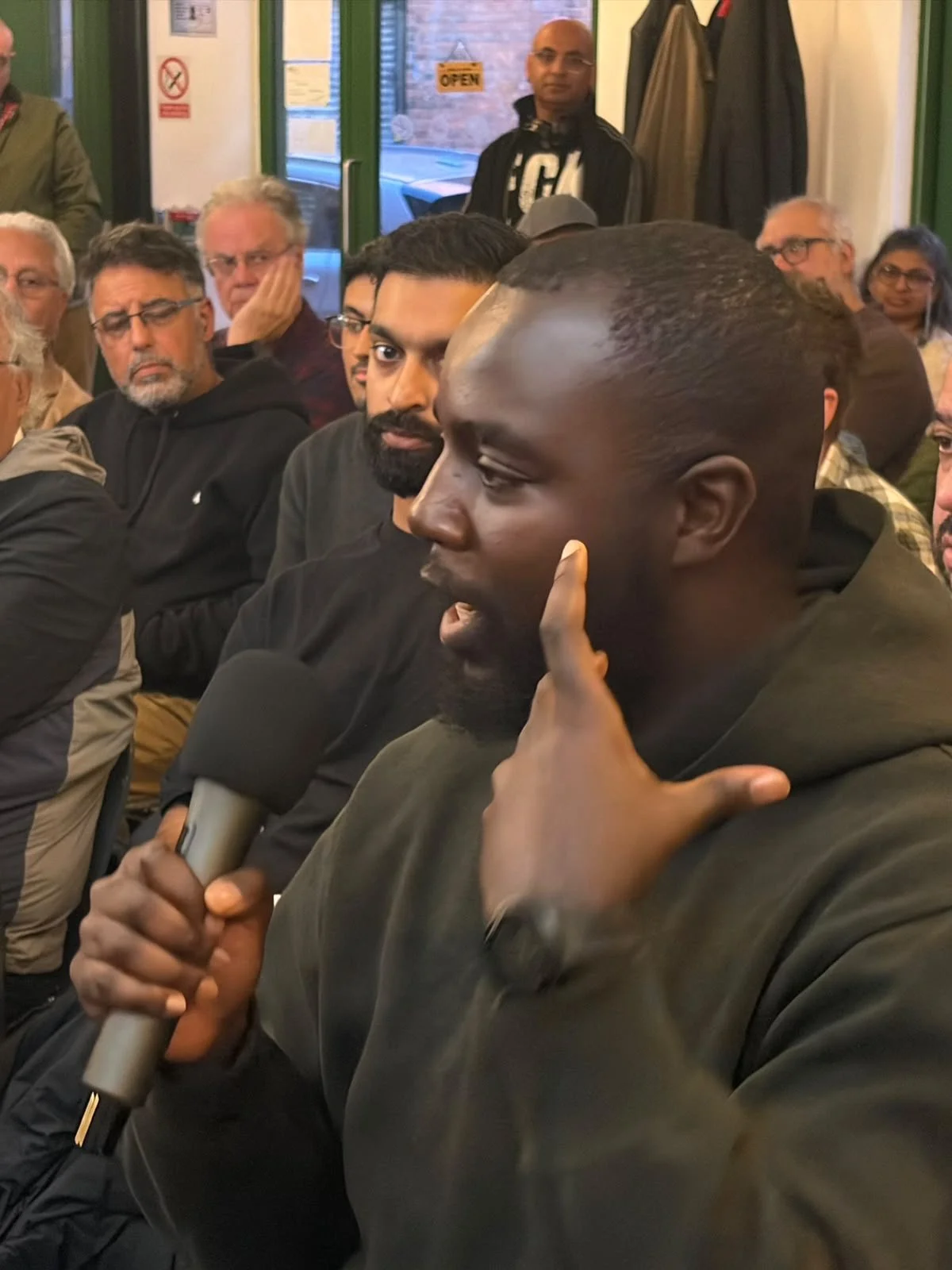
Taj: We started the book tour in my hometown, Luton. It was a fantastic community event, lots of people who don't usually go to these sorts of events - family, friends, schoolmates, teachers. There was a hijab-wearing woman in the front who was in tears, talking about her experience of Islamophobia.
In Glasgow, there were two Muslim women who set up Dunbartonshire Against Racism. A young girl said she was terrified. She was knocking on doors doing anti-racism work, and she got racially abused. She asked, “What advice would you give me as a young woman?” The number of people in the room who stood up and said, “We're gonna knock on doors with you. Connect with us.”
So, the book launch events have also been a networking opportunity for anti-racists. What I've tried to do is give an opportunity for local anti-racist groups to talk about the work they're doing and allow the audience to get involved with them. There are lots of people who are angry, who are quite frustrated with the narratives they're seeing. There's lots of interest in the stories, but I think what I've seen is lots of people interested in the here and now: what do we do next? How do we organise against the far right?
It's been a great tour so far, exhausting, but I’ve been seeing the passion from people, seeing people feeling inspired.
There's a lot I've spoken about today which is horrific, but we have to remember that our elders resisted and fought back. They made our communities safer, made sure we don't have to look over our shoulders every two minutes. It's important to remember who did that. It wasn't the government. It wasn't an act of parliament. It wasn't an NGO. It was people.
RADAR (Reporting And Documenting Acts of Racism) is an independent monitoring and support service set up by Taj Ali and others.
You can find more details here: https://antiracistradar.co.uk/
Taj Ali’s book is published by Manchester University Press: https://manchesteruniversitypress.co.uk/9781526177582/