
Focusing on surface-level diversity is stopping Britain from becoming truly multicultural
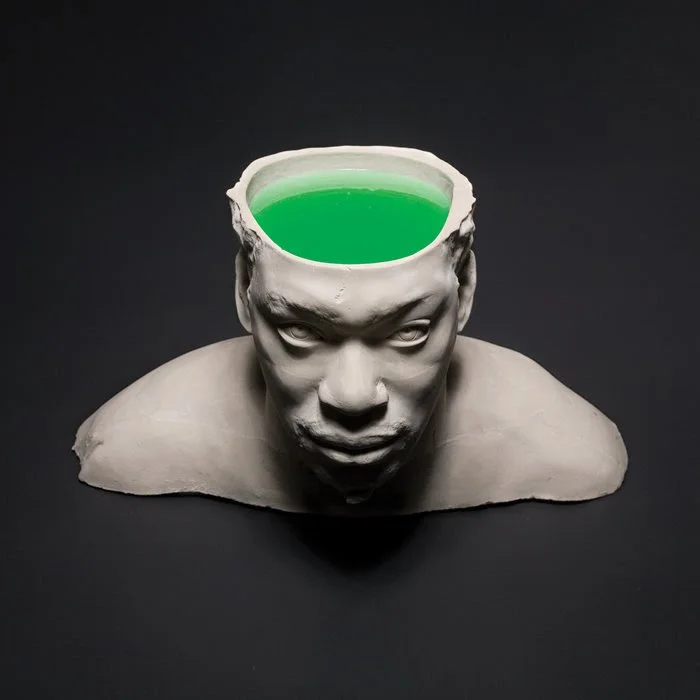
Arguments about diversity in Britain often get stuck on the surface. Instead of talking about who holds power or how resources are distributed, many politicians and culture warriors obsess over the colour of faces in adverts, media, and public spaces.
Reform UK MP Sarah Pochin claimed that adverts “full of black people, full of Asian people” drove her “mad”, before later apologising for her wording. Conservative MP Robert Jenrick depicted Handsworth in Birmingham as a slum where he “didn’t see another white face”. One reading of this comment is that it implies the absence of white people signals disorder or decline.
In 2020, a Sainsbury’s Christmas advert featuring a black family sparked outrage online. Critics on social media declared that the country they recognised had vanished, and that “too many” adverts now featured people who did not look like them.
Such controversies point to the heart of a dilemma facing Britain today: a society wrestling with deep inequalities keeps picking fights about surface-level diversity.
A central problem is that multiculturalism is often confused with what might be called “multicolourism”. Multicolourism is cosmetic. It fixates on racial representation in marketing materials, political campaigns, or media imagery, and in doing so masks enduring disparities in wealth, housing, and senior leadership.
Multiculturalism, by contrast, is hard work. It is not simply about how Britain looks, but about how it functions. It seeks to build institutions, norms, and everyday practices that enable different communities to disagree, collaborate, and coexist while enjoying equal rights and opportunities. It is about the distribution of resources and civic respect, not counting the number of black or brown faces in an advert or campaign.
There is a long history of anxiety about black and Asian people occupying space in British culture and politics. Concerns about racial diversity are often conflated with debates about immigration and multiculturalism, leading to assumptions that all black and Asian people are migrants, or that skin colour reveals someone’s values or loyalties. A Reform UK mayoral candidate, for example, has claimed that David Lammy and other ethnic minority politicians do not have a “primary loyalty” to Britain.
While critics of multiculturalism have objected to the visibility of black and Asian people in public life, proponents of multicolourism have diverted attention away from the inequalities embedded within British society.
The advertising sector illustrates the limits of this approach. In a sign of progress, the Advertising Standards Authority now urges agencies to prioritise the quality of portrayals rather than numerical ratios, acknowledging that representation must move beyond tokenism. Yet research shows that while agencies showcase diverse imagery, leadership and creative control remain overwhelmingly white.
In 2021, the Green Park Business Leaders Index found no black chairs, CEOs, or CFOs in the FTSE 100. The 2024 Parker Review reported little change, with no more than two black chairs, CEOs, or CFOs. It also found that around 13% of senior management positions in the top 100 firms were held by people labelled “ethnic minorities”, compared with 18% of the population identified as non-white in the 2021 census.
Wealth inequality is even more stark. Research from the London School of Economics’ Centre for Analysis of Social Exclusion shows that the median Bangladeshi, black African, and black Caribbean households have negligible net wealth, meaning their liabilities roughly equal or exceed the value of their assets. By comparison, the median white British household has a net worth of £140,000. These disparities shape where people can live, the stability they can build, and the risks they can afford to take.
Not long ago, Britain appeared to be moving toward a confident multicultural future. Post-war migration reshaped the country, and equality legislation in the 1960s and 70s helped dismantle formal discrimination. By 2000, the Commission on the Future of Multi-Ethnic Britain outlined a serious vision for plural identities and equal citizenship.
Over the past 15 years, that confidence has eroded. The Sewell Commission’s 2021 assertion that Britain is not “institutionally racist” shifted debate further away from structural reform. Some argue that the presence of minority ethnic individuals in senior positions proves institutions are not racist. This, too, reflects multicolourism. It avoids asking whether such individuals have succeeded despite institutional barriers rather than because those barriers no longer exist.
Britain has reached an odd moment. Institutions celebrate how diverse they appear, while leadership structures change slowly. We applaud footballers taking the knee, yet risk losing a generation of black, Asian, and mixed-heritage coaches and managers. We elect politicians who celebrate immigrant heritage while supporting policies that make life harder for ethnic minorities and migrants. The country seems more comfortable with the appearance of inclusion than with the responsibilities it demands.
Arguments about who appears on a poster or in a Christmas advert keep Britain stuck in the politics of multicolourism. They are loud, emotive, and ultimately hollow.
The alternative path is harder. It requires confronting wealth gaps, examining why leadership remains so homogeneous, and addressing the structural barriers some communities face while others benefit from inherited advantage. This is the work of serious multiculturalism: fair building institutions, opportunities that are real, and systems that are worthy of trust.
It is slower. It is more demanding. It cannot be captured in a single image. But it is the only route to a Britain confident enough not to fear its own reflection.
Find the link to the original published article here.