
Freedom of Speech – The New Respectability of Hate
For a second-generation British Asian who grew up in England during the 1970s, the past is never entirely past. I was raised in an era when open racism was not just tolerated but expected; when newspapers described entire communities as “invasions,” when politicians spoke of being “swamped,” and when hate came wearing the uniform of patriotism. Over the years, many of us believed things had changed — that Britain had grown out of its worst instincts. But lately, I’m no longer sure.
What feels new, and in many ways more dangerous, is not the existence of hate itself, but its slow, deliberate normalisation. Once confined to the fringes, the language of the far right now flows easily from the lips of those in power. Phrases that once belonged to the margins — “culture wars,” “invasion,” “woke elite” — are becoming part of our national vocabulary, legitimised through repetition and media amplification. Politicians now speak in the tones of talk-radio callers and broadcasters.
It is this echo chamber that frightens me most. The vitriol of the 1970s was crude, but at least it was recognisable. We knew who the National Front were; we knew where the danger lived. Today, the rhetoric is sleeker, threaded with plausible deniability. It is often presented in the language of “free speech,” “national identity,” or “concern for ordinary people.” The slurs are subtler, the intent no less corrosive. Hatred has been rebranded as authenticity, and bigotry as bravery.
In Birmingham and across the Midlands, reports of hate crimes have risen again — racially aggravated attacks, verbal abuse, the defacing of religious buildings, harassment on public transport and in schools. Yet what unsettles me most is the chorus of justification that follows. People no longer whisper their prejudice; they post it. And when challenged, they reach for the same convenient shield: “I’m just saying what everyone’s thinking.” It’s a phrase that has become a kind of moral solvent, dissolving accountability under the illusion of honesty.
This isn’t only happening in back alleys or anonymous comment sections. It’s happening at the dispatch box, in press briefings, and on television. Each time a politician repeats a falsehood about migrants, or a pundit treats cruelty as courage, another boundary shifts. The line between opinion and incitement grows thinner, and public decency is quietly redefined. What was once unthinkable becomes debatable, and what is debatable becomes policy.
The most insidious part of this process is how ordinary it feels. The anger is professionalised, the prejudice smoothed over by the cadence of media training. Entire organisations have emerged to launder hatred through the language of principle — think tanks with sterile names and glossy websites, spokespeople who speak of “defending values” or “protecting our culture.” They appear on panels, in Parliament, on podcasts, insisting they are merely “raising difficult questions.” But beneath the civility lies the same old poison: the belief that some lives are more deserving of belonging than others.
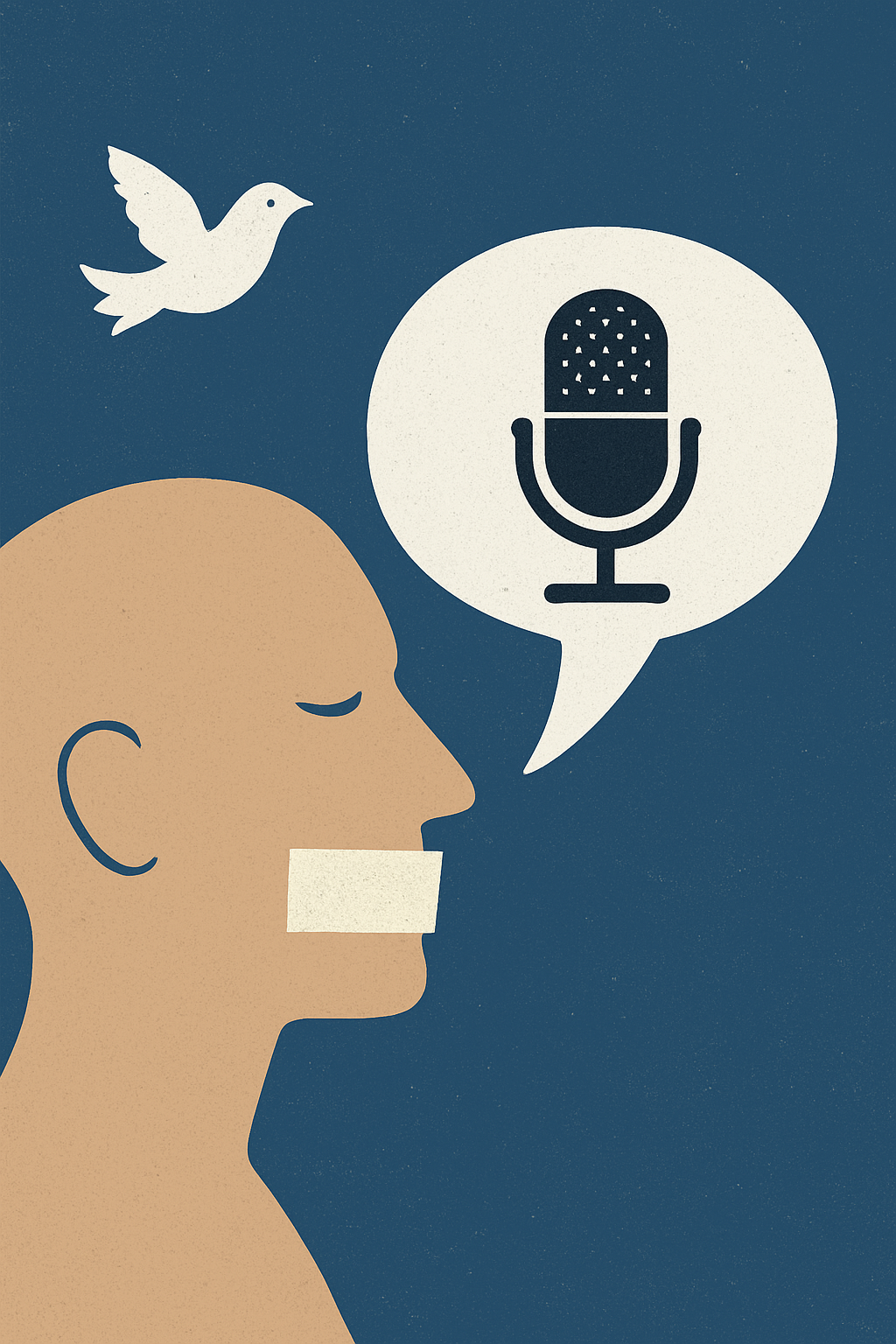
We are told that to object to this, to call it what it is, is to be enemies of free speech. The phrase has become a shield, wielded not to protect open debate but to batter dissent into silence. The irony is cruel: those who speak the loudest about censorship are often the most eager to silence others. What passes for “debate” in Britain today is too often a performance — a theatre of provocation where empathy is weakness and cruelty is content.
Recently, Conservative politician Robert Jenrick described Handsworth as a “slum” and remarked that he “didn’t see any White faces” during his brief, superficial 90-minute visit. His comments were clearly racist, yet he faced no reprimand from his party leader, and many simply dismissed his remarks as an exercise of free speech. Other politicians, such as Suella Braverman, have spoken of a “hurricane” of migration — language widely likened to Enoch Powell’s notorious 1968 “rivers of blood” speech. Yet she too has faced no formal reprimand, her remarks seemingly regarded as acceptable.
When I think back to my childhood, I remember how my parents used to lower their voices when discussing racism. They believed that progress was inevitable, that their children would inherit a gentler country. And in many ways, they were right: laws changed, representation grew, and the country did move forward. But progress is never a straight line. It bends and buckles under pressure. What we are living through now is not a return to the past, but something more sophisticated — a cultural regression dressed in the vocabulary of liberty.
True freedom of speech is not the freedom to harm others. It is the freedom to speak with honesty, to listen with humility, and to be changed by conversation. It is not won through shouting the loudest, but through the courage to understand those unlike us. We seem to have forgotten that. Our public discourse, once imagined as a marketplace of ideas, now resembles a battlefield of identities — each side shouting its own version of truth into the void.
And so, I find myself asking what kind of country this has become. When politicians speak in slogans lifted from message boards, when broadcasters trade empathy for engagement metrics, and when cruelty wears the mask of candour — what are we defending in the name of freedom? If this is what “free speech” now means, then perhaps the word has lost its moral weight.
What Britain needs is not less speech, but speech of a higher quality: the kind that brings back nuance where demagogues insist on simplicity; the kind that listens, interrogates, and still has the courage to care. True freedom is not measured by how harshly we can speak, but by how compassionately we can respond. Yet today, far-right ideas are being normalised under the false banner of “freedom of speech.”