
The Colour of Fear: Racism and Safety for Women of Colour in the West Midlands
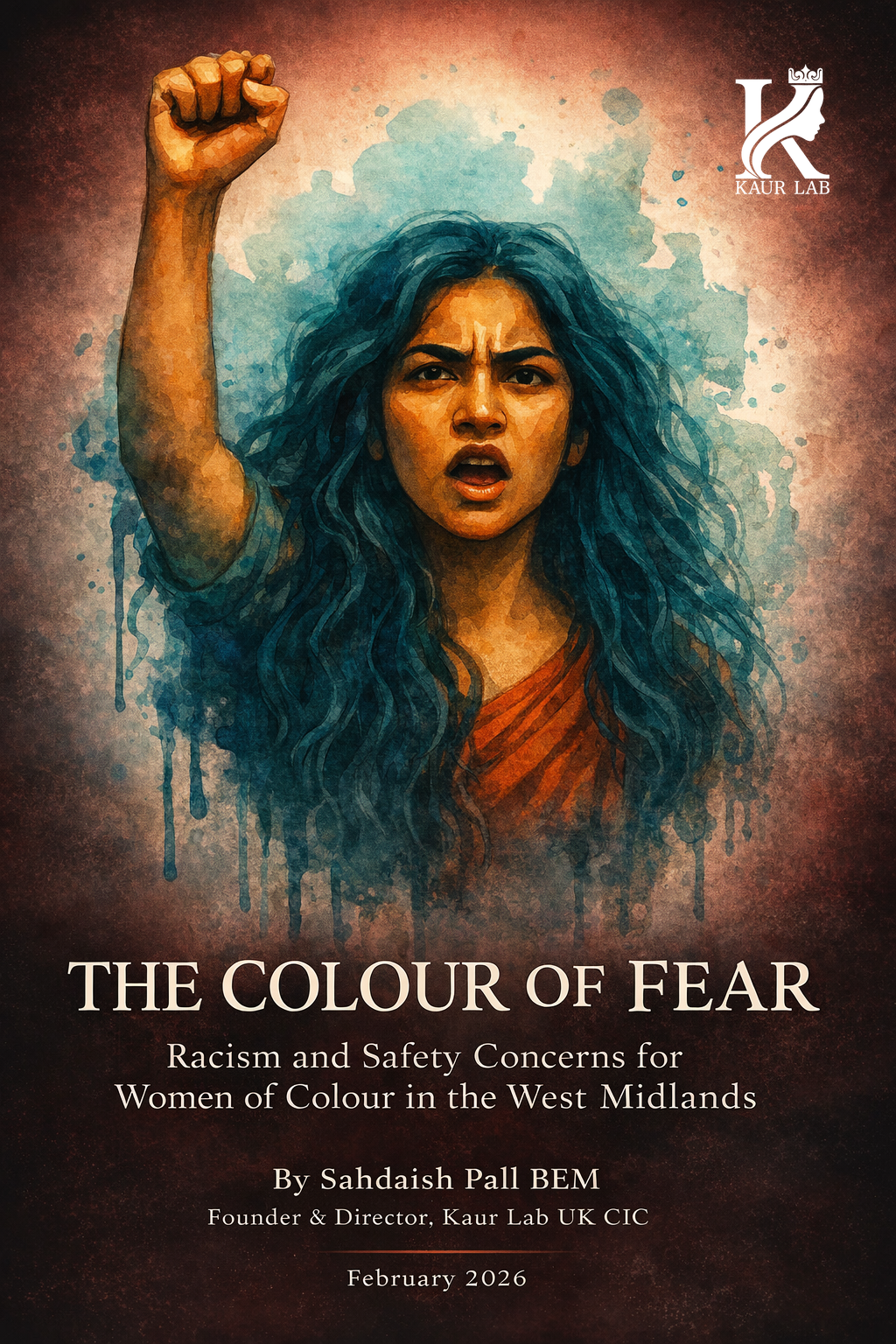
In late 2024, I began hearing the same message again and again from women across the West Midlands: “something has shifted.” Women spoke about feeling watched, targeted, and unsafe in ways that felt more overt and more frightening than ever before. For many women of colour, racism has never been new, but what felt different was the intensity, the frequency, and the sense that hostility was becoming normalised.
As racist incidents escalated in September 2025 with the racially motivated rape of a Sikh woman, followed by another similar incident in October 2025, Kaur Lab UK CIC launched a regional survey to capture the lived experiences of women of colour experiencing racism and hate. The aim was simple but urgent: to document what women were facing, how it was affecting their daily lives, and what they believe needs to change.
The findings, published in The Colour of Fear: Racism and Safety Concerns for Women of Colour in the West Midlands, are deeply concerning. Over three-quarters (76%) of respondents reported experiencing racism or a hate incident since summer 2024. These incidents were not isolated or abstract; they took place on streets, public transport, high streets, workplaces, and online. Women described verbal abuse, racial slurs, intimidation, sexualised racism, and physical threats.
The impact on women’s wellbeing has been profound. High levels of anxiety (76%), hypervigilance (76.5%), fear (63.5%), and trauma (33%) were reported. Many women described constantly scanning their surroundings, planning routes, avoiding eye contact, and anticipating hostility. These are not minor adjustments; they are survival strategies.
More than half (57%) of respondents said they now avoid going out alone. Others reported avoiding public transport (37%), staying indoors after dark, changing how they dress (19.5%), or relying on taxis (17%) instead of buses. Some women said they now go out only if accompanied. These behavioural changes highlight a stark reality: women of colour are modifying their lives to manage risks that should not exist.
Despite the scale of harm, most women did not report incidents to the police (83%). The reasons were consistent: fear of not being believed, lack of confidence that action would be taken, previous negative experiences, and a sense that racism has become so normalised that it is no longer worth reporting. This points to a significant gap between policy and lived experience, and to a justice system many women feel does not work for them.
The survey also revealed deep anxiety about the future. Over 90% of respondents said they were worried about younger women, daughters, and siblings facing racism. For many mothers, the fear is not just personal; it is generational.
Alongside the data, women were clear about what needs to change. They called for stronger leadership in calling out racism, better reporting pathways, visible consequences for perpetrators, improved policing responses, and meaningful investment in community safety and education.
This report is about women whose sense of safety, freedom, and belonging is being eroded in the places they live, work, and raise their families. Many of the women who responded are British citizens; others are long-term residents who have built their lives here and believe this country to be their home. What they are describing is not a request for special treatment, but a call for equity, dignity, and basic human rights—the right to move freely, to feel safe in public, and to belong without fear.
The report will be shared with the West Midlands Combined Authority (WMCA), West Midlands Police, and local and national government bodies. It will also be submitted to the Home Office and the Women and Equalities Select Committee, alongside correspondence with Members of Parliament, including local MPs, the Safeguarding Minister, and other ministers and MPs holding relevant portfolios.
The report includes clear, evidence-based recommendations outlining what must change at the local, regional, and national levels. These recommendations will be shared directly with the relevant agencies and decision-makers to drive meaningful action, accountability, and systemic change in how racism, hate incidents, and the safety of women of colour are addressed.
Read the full report here.