
Recently, I watched a video about the history of social and societal transformation. It traced a familiar lineage of influential figures – men such as Dr Martin Luther King Jr, Mahatma Gandhi, and Nelson Mandela.
What struck me was not who was included.
But who was missing?
No women.
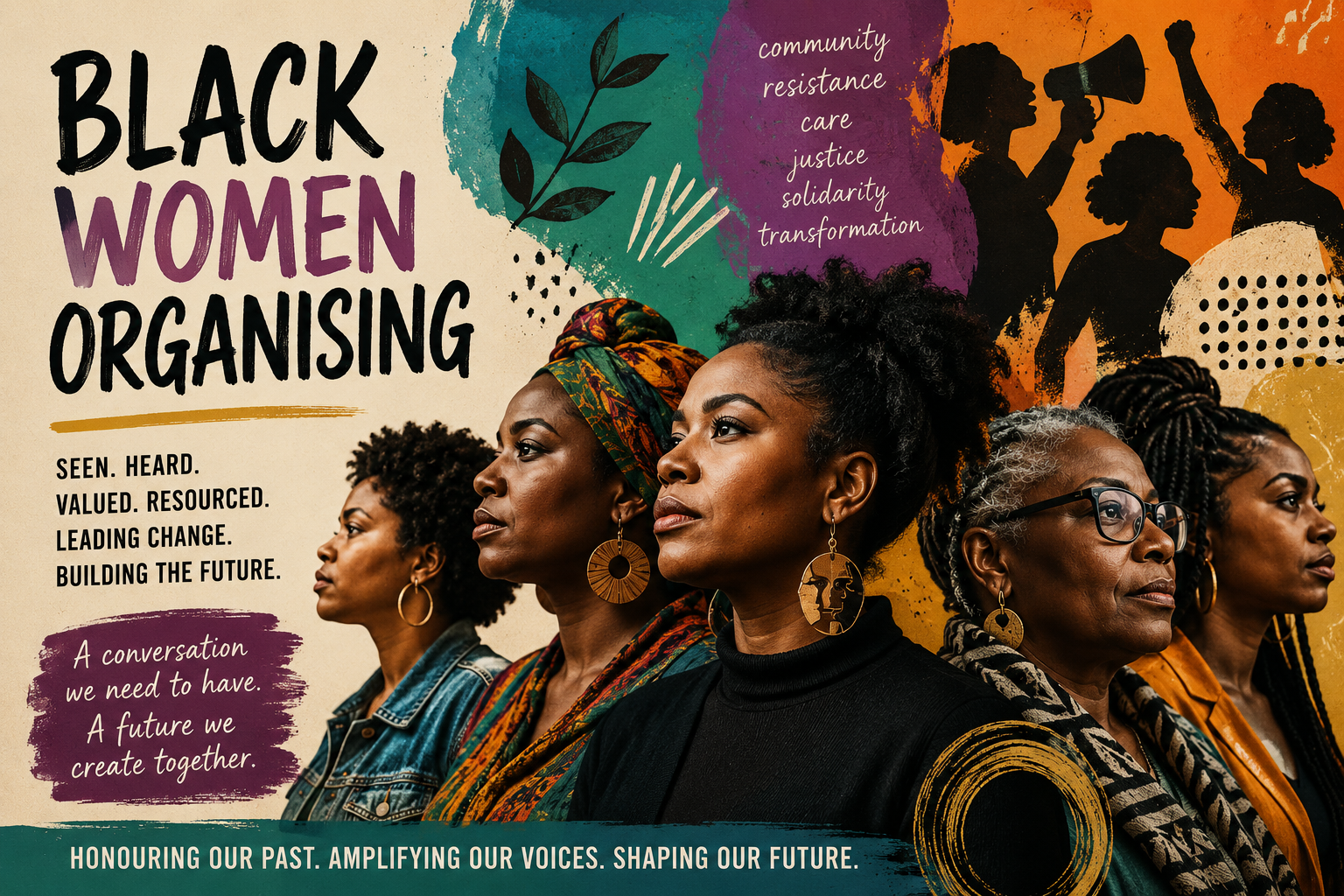
And it made me stop and think about the role Black women have played – and continue to play – in organising movement building, anti-racist work, community leadership and social change.
Not only the well-known figures whose names occasionally enter public consciousness, but the countless Black women whose labour often goes unseen:
Convening people
Holding communities together
Organising behind the scene
Mentoring younger generations
Carrying emotional and cultural labour
Challenging institutions
Creating spaces of care, resistance and possibility
So much of this happens quietly. Even invisibly.
And yet movements, communities and organisations have depended on women organising.
As a Black woman myself, this is not an abstract issue. Over many years, I have observed - and experienced - the complex realities Black women often navigate within organising and leadership spaces. The pressure of being visible and invisible at the same time.
It feels timely that Kimberlé Crenshaw is preparing to launch a new book. Her work helped bring wider attention to the ways Black women are often navigating both racism and sexism simultaneously, realities many Black women organisers know intimately.
So here’s what I’m hoping for.
I want to create space for conversations about black women organising.
Over the coming months, BRIG aims to set up conversations at the BRIG café and potentially through a podcast or recorded discussion series to discuss some deep questions about:
Why do movements repeatedly rely on Black women while simultaneously marginalising them?
What does “recognition” even mean in systems that still extract from Black women?
What is the cost of always being “strong,” “resilient,” “community-minded,” or “the backbone”?
Who gets remembered as visionary leaders, and who gets remembered, if at all, as support?
What happens when Black women decide they no longer want to carry everybody else?
What are your views on this topic?
Would you be interested in taking part in conversations?
If this topic speaks to you, we’d love to hear from you.
Please contact info@wearebrig.co.uk if you would like to find out more.