
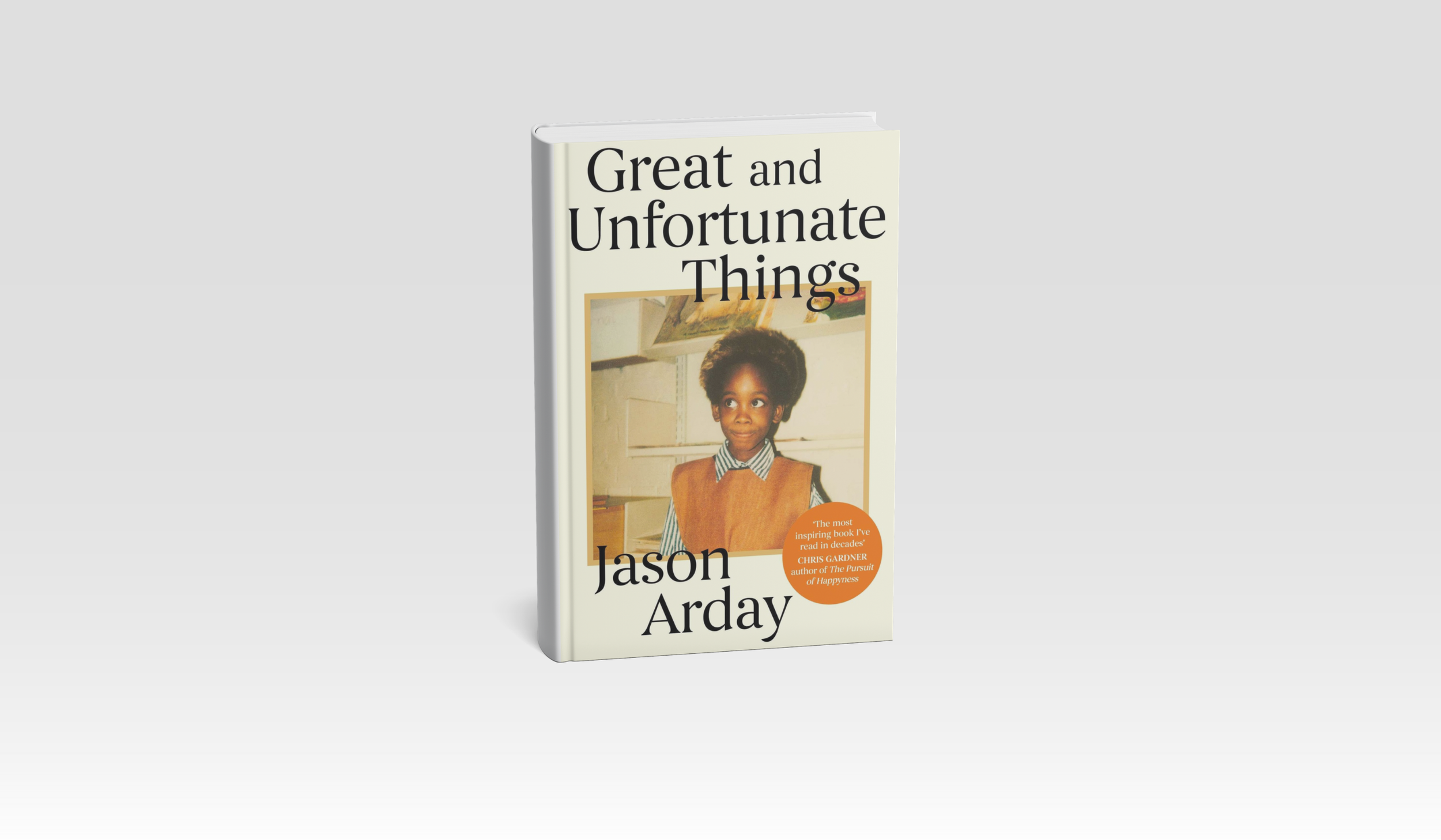
Great and Unfortunate Things was published by Simon & Schuster in August 2026
Even if you were unaware of last month’s tragedy, hearing Jason Arday narrate his memoir may easily move you to tears. Arday recounts a childhood in which speech came late, yet few people have fought harder to have their voice heard.
The memoir begins with a paradox. Unable to speak until the age of eleven, he has become one of Britain's most prominent public intellectuals. However, Great and Unfortunate Things is not simply a story about finding a voice. It is a meditation on care and persistence in the face of institutions that repeatedly failed to recognise his humanity.
It demands to be listened to, as well as read. Arday maps his journey from a South London council house to a Cambridge professorship with wit and tenderness – this is an account of love and faith, centring above all the perpetual power of community.
Arday writes that, following diagnoses in early childhood with global developmental delay and autism, his family were informed that he might never speak, write or live independently, a prognosis that the memoir repeatedly returns to as both burden and motivation. The opening chapters offer a unique insight into the mind of a non-verbal child. Very few could write a full memoir at 40, but Arday experienced more than most before reaching adulthood.
The book is at its most compelling when reconstructing a childhood experienced largely outside language. Arday recalls a world organised through colour, sensation and feeling rather than speech, inviting readers to reconsider assumptions about cognition, communication and intelligence. These chapters do more than recount an individual experience; they expose the limitations of educational and medical frameworks that too often equate speech with understanding.
Arday describes numerous encounters with educators and healthcare professionals whom he felt dismissed, mistreated or unable to recognise his potential. Let down by all aside from his mother Giff, with two autistic children (Arday’s older brother was diagnosed the year before him), she had an intimate understanding of neurodivergence long before the word was ever used. Aware that both of her children had varying needs, she dedicated herself to helping her sons reach milestones that many had already decided were impossible. Using hand-drawn pictures, pop music and television shows, Giff developed her own language, through which she helped her children navigate the world.
The book repeatedly returns to Giff's refusal to accept professional judgements that reduced her son to a diagnosis. Her labour, creativity and faith complicate familiar narratives of individual achievement by reminding readers that success is often collective long before it appears personal.
In his adulthood, Arday faced mounting challenges and recalls significant struggles with literacy throughout his teenage years. Excluded from education and bullied and attacked by his peers, experiences that later become central to the memoir's account of educational transformation, Arday was determined to leave the world better than he found it. Volunteering around the world, running 30 marathons in 35 days to raise money for the unhoused community, Arday’s empathy and drive pervade every page.
As is the case with many memoirs, this is not a book without its faults. The memoir's principal weakness lies in its tendency towards inevitability. Certain episodes are narrated less as moments of uncertainty than as confirmation of a future greatness readers already know Arday will achieve. The effect is occasionally hagiographic, reducing complexity and contradiction in favour of a narrative of destiny.
The collaborative nature of the memoir is occasionally visible on the surface of the text. Some passages possess the immediacy of lived recollection; others are more evidently shaped by the conventions of contemporary memoir and motivational narrative. The result is a book that sometimes struggles to reconcile intimacy with inspiration, reflection with uplift.
Whether every anecdote can bear the interpretive weight placed upon it is ultimately beside the point. The memoir's significance lies less in documentary verification than in the questions it raises about disability, care, aspiration, and institutional failure.
What distinguishes Great and Unfortunate Things is not its account of exceptional success but its insistence on the social foundations of human flourishing. This is a memoir about dependence as much as independence, about the people who refuse institutional verdicts and imagine different futures. If the book occasionally gravitates towards myth-making, it remains at its best when reminding readers that achievement rarely belongs to individuals alone. Arday's story is compelling not because it is singular, but because it illuminates the networks of care, faith and solidarity that make lives possible.
Arday and Giff are a gift to any reader; their shared ability to find hope in the direst of circumstances is what deems Great and Unfortunate Things both instructive and indelible. Although we receive Arday’s final words prematurely, may readers be enthused and comforted by this account of empathy and strength.