
BRIG Statement on the death of Professor Jason Arday
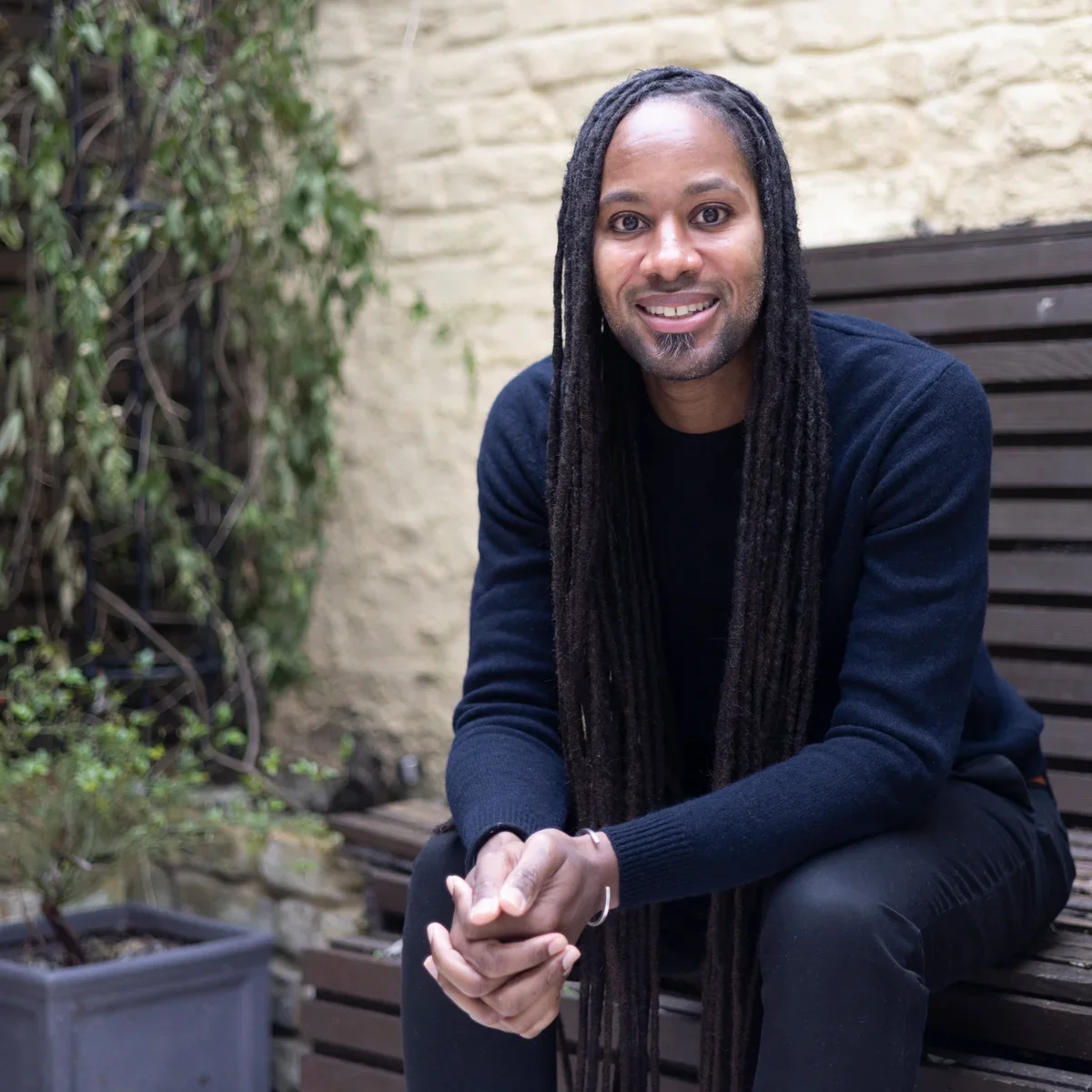
Once again we find ourselves mourning the death of a Black man in the most horrendous circumstances.
Professor Jason Arday was found unresponsive in his home on Friday 14th August.
He had been at the centre of a brutal and unrelenting press and media storm surrounding accusations of plagiarism and falsehoods about some of his achievements.
More than 240 articles were published about Jason over the course of 22 days. Seventy-five percent (75%) of them were published after he had resigned his position at Cambridge. Family and friends raised concerns about his wellbeing in the days before his death. They reported that Jason felt overwhelmed by the relentless scrutiny he was experiencing and could no longer see a way forward.
Jason's death leaves us deeply saddened, heartbroken and angry. It has also compelled us to reflect on patterns that many Black people instantly recognised in the public response to his career and, ultimately, to the controversies that engulfed him.
We recognise the pattern of racism at play in what happened to Jason.
A Black person takes up a significant role in one of the world's most elite institutions and quickly becomes invested with symbolic significance. Their appointment is celebrated as evidence that barriers are falling and institutions are changing. Yet the problem is not only that Black people are excluded from elite institutions. It is also that inclusion is too often organised through exceptionalism. Particular individuals are asked to stand for collective progress long before institutions have done the harder work of transforming cultures of belonging, recognition and power. When difficulties arise, the enthusiasm that accompanied their ascent can quickly give way to distance, judgement and abandonment.
As Black people, many of us grow up with the message that we have to be exceptional simply to be treated as equal. Work harder. Be better qualified. Make fewer mistakes. Constantly prove that we deserve to be in the room. And then, when we get there, we can still be told that we are only there because of DEI; that standards were lowered for us; that somebody else, more deserving, lost out.
We have to prove our merit to get through the door, only to have it questioned once we're inside.
Jason Arday spoke publicly about being autistic and about aspects of his developmental history that became central to media narratives about his life and career. Whatever debates may exist about particular biographical claims, questions of accuracy should not eclipse a larger issue: how institutions, journalists and the public respond when a person becomes the object of sustained public scrutiny while also negotiating forms of vulnerability and difference.
And Jason was already a professor before he arrived at Cambridge.
He had been Professor of Sociology of Education at the University of Glasgow. Liverpool John Moores University had investigated an earlier complaint concerning plagiarism in his doctoral work and was not upheld.
Questions were raised about aspects of Jason's academic and public record, and some degree of scrutiny was both inevitable and legitimate. At the same time, there are serious questions about the scale, intensity and cumulative effect of the coverage that followed, particularly once reporting moved beyond the careful examination of evidence and became part of a wider public spectacle.
We watched a Black, autistic man being subjected to extraordinary levels of public scrutiny and pressure. Where once he was praised for his extraordinary life story, the same media found a new story - but one that is all too familiar to Black people – that Jason didn’t belong, didn’t deserve to be there and hadn’t earned the position he had achieved.
Jason told family and friends that he was struggling under the weight of what was happening around him. Yet public scrutiny continued unabated.
We cannot accept that what happened was normal or proportionate.
Where was the duty of care? Where was the safeguarding of someone known to be vulnerable? At what point does legitimate scrutiny cross a line and become something altogether different?
Duty of care cannot simply mean intervening when a crisis becomes visible. It must also involve recognising the pressures that institutions can place on those they elevate as symbols of change. Celebrating an appointment is easy. Creating conditions in which people can flourish is much harder.
BRIG believes there should be a thorough and independent examination of the circumstances surrounding Jason's death and of the treatment he experienced in the period leading up to it.
Because there is a lot here to understand.
We cannot ignore the racism and anti-Blackness that surrounded what happened. Jason’s alleged failings were folded into a much bigger, national assault on equity, diversity and inclusion, with Jason turned into a case study for people who had already decided what his career proved.
And there are difficult questions for those of us committed to racial justice too.
Many celebrated Jason's appointment to Cambridge. Seeing a Black scholar take up a position at one of Britain's most prestigious institutions was a moment of symbolic importance, one that seemed to speak to broader questions of representation, opportunity and institutional change.
Yet Jason's appointment also generated two revealing responses. On the one hand, he was subjected to forms of racism that treated his presence within an elite institution as an affront to established hierarchies. On the other hand, many celebrations of the appointment elevated its symbolic significance above sustained engagement with his scholarship. Too often, the appointment was treated less as an occasion to debate ideas than as evidence that institutions were becoming more inclusive.
The result was a curious convergence. Hostility and celebration alike left little room for the ordinary practices of intellectual life: disagreement, critique, intellectual development, and recognition of both the achievements and limitations of a scholar's work. In different ways, both responses risked treating Jason as a symbol rather than a scholar. His critics made him a cautionary tale about diversity initiatives. Some of his supporters made him a symbol of institutional progress. Both approaches reflected a wider politics of representation in which individuals are called upon to stand for wider cultural and political struggles. In each case, sustained engagement with his ideas, arguments and scholarship risked being displaced by arguments about what he supposedly represented.
Representation matters. But representation alone is not institutional change. The problem is not simply that Black people remain excluded from elite institutions. It is also that inclusion is too often organised through exceptionalism. A Black "first" can become evidence that progress has been made, while deeper questions about culture, belonging and power remain unresolved. The burden of demonstrating change then falls on the very people most exposed when that change proves incomplete. Symbolic breakthroughs can open doors. They cannot, by themselves, transform institutions.
Jason's work explored questions of race, education, neurodiversity and social mobility, while also challenging conventional assumptions about intelligence, achievement and belonging. Whether one agreed with all aspects of his work or not, he generated important conversations across education, sociology and public life.
Much of the public discussion surrounding Jason has focused, understandably, on the conduct of sections of the media. Those questions matter. But BRIG is also concerned with another question that has received far less attention: what happens when institutions celebrate Black success symbolically while leaving individuals to bear the costs of being symbols? That, too, is part of the story we need to confront.
If we are serious about honouring Jason, we should resist reducing him either to a symbol of progress or a cautionary tale. We should engage with his scholarship, debate his arguments, assess his intellectual contributions critically and fairly, and ensure that discussions of his life are not confined to the controversies that surrounded its final weeks.
There is much more we need to say and much more we need to understand.
About racism and anti-Blackness.
About neurodiversity and vulnerability.
About media power and institutional responsibility.
About representation, merit and belonging.
And about the rush to celebrate representation and Black exceptionalism without asking enough about the institutions themselves. Institutions can welcome Black achievement without transforming the cultures that shape who is recognised, who belongs and who is allowed to make mistakes. They can celebrate diversity while leaving intact conditions that isolate, exceptionalise and expose those expected to embody progress. Representation matters. But people should not have to carry the burden of personifying institutional change.
We cannot do justice to those questions here.
We will return to these in a fuller reflection in our BRIG newsletter. We will create space for the difficult conversations that need to take place.
For now, we mourn Jason.
A family has lost someone they love.
Two young children have lost their father.
And a 41-year-old Black man, who overcame extraordinary barriers, built an academic career, and still had so much life ahead of him, is gone.
We send our love and solidarity to Jason's family, friends, colleagues and everyone mourning his loss.
May Professor Jason Arday rest in peace.
If anything in this statement affects you, Samaritans are available around the clock on 166 123, free and confidential.
The Black, African and Asian Therapy Network (baatn.org.uk) can also help you find a therapist who understands your cultural background.
A reflections event for Jason Arday will be taking place at the Legacy Centre of Excellence on Saturday 3rd October 2026, 5-9pm. The event is by BRIG, the Legacy Centre and Black & Diverse Safeguarding Communities (BDSC).