
What does it really take to make Birmingham an anti-racist city? And how will we know if we're getting there?
We've all seen the statements. Organisations signing pledges, institutions making commitments, and leaders including anti-racism in their strategies and mission statements.
But what happens next?
What are these organisations and individuals actually doing and how is progress being made?
Most importantly, what difference is any of this making to the people and communities who experience racism?
Well, it's time to start asking those questions. And we want YOU to be part of asking them.
The BRIG Newsletter is launching a new series putting the spotlight on the organisations, institutions and individuals who say they are committed to making Birmingham an anti-racist city - and going beyond that.
We’ll be exploring what exactly organisations have committed to, what they’re doing to put those commitments into practice, what’s working, what’s changing and what challenges remain to be tackled.
And we want Birmingham communities to be part of that conversation, asking their own questions about the progress being made.
Why should this matter to you?
You might be wondering what all this has to do with your everyday life.
The decisions made by key institutions, organisations and individuals affect our access to jobs, education, housing, health services, funding, opportunities and representation. They influence whose voices are heard, whose experiences are recognised and who gets a say in shaping the future of our city.
An anti-racist city cannot simply be something that organisations aspire to. It must be something that people can experience in their everyday lives.
Birmingham is a city of amazing diversity that should be reflected not just in the way Birmingham looks, but in how power, opportunities and resources are shared.
More than 70 individuals and organisations have signed up to the BRIG Anti-Racist City pledge, committing to work towards making Birmingham an anti-racist city by 2035.
That's an important starting point. But a pledge is a commitment, not proof of progress.
With a new body – the Beyond Racism City Advisory Group – being established to oversee the achievement of the vision, and the upcoming Beyond Racism Summit in December 2026, Birmingham is entering an important new phase in its journey towards becoming an anti-racist city.
Through this series we want to contribute to this journey, by exploring what organisations are actually doing, what difference their actions are making,
So we're going to look beyond the statements and ask what is actually happening, and how people and communities affected by racism are involved in shaping the work and influencing decisions.
And BRIG won’t be exempt from these conversations. Having been at the forefront of championing Birmingham’s ambition to become a world leading anti-racist city by 2035, and helping to bring this ambition into the heart of the city’s partnership arrangements, we recognise that we too must be open to challenge, questions and scrutiny.
To start the series, we invited Brian Carr, Chief Executive of Birmingham Voluntary Services Council (BVSC), to give an introductory overview of the organisation’s commitment to tackling racism, and a bit about himself.
Have a read and we hope it will get you thinking, and sending in your questions - which we will put to him in our next edition…
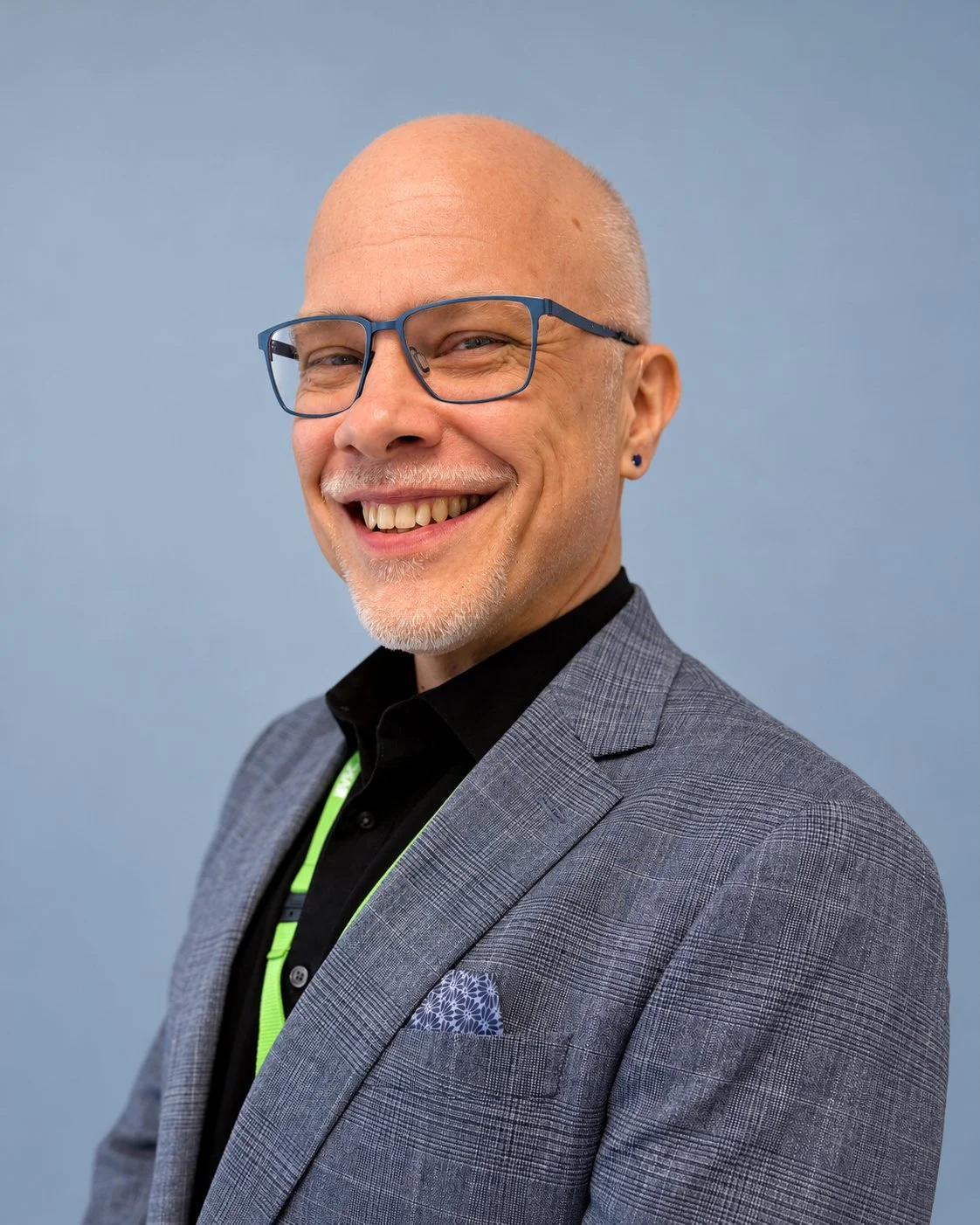

Brian Carr – who are you?
I’m Chief Executive of BVSC (Birmingham Voluntary Service Council) and have spent most of my working life in the voluntary sector, including more than twenty years leading BVSC.
I’m Scottish by birth and grew up in Carnoustie, which is a small town on the north east coast.
Apart from the opportunity to work for BVSC, the city itself was a big part of the draw. I was attracted by its diversity, and by its range of community activity. Birmingham has one of the most vibrant, diverse and inventive community sectors in the country.
What does BVSC do?
BVSC is what’s sometimes called an infrastructure organisation. Birmingham has somewhere between three and four thousand voluntary, community, faith and social enterprise organisations operating at any one time. Our job is to help them be strong, connected and heard. We provide advice, training, community research services and help groups find funding. We run volunteering matching and support citywide sector-led programmes.
We also pass a large share of our income straight back out to the sector and to communities. Last year that was around £12 million in grants and contracts. And we bring the sector’s voice into the rooms where decisions about the city get made, which is why I sit on the City Partnership Board.
Put simply, we try to make sure that the people doing the work in communities have what they need to keep doing it.
What has BVSC committed to do to tackle racism, and how are those commitments being put into practice?
“I’d be the first to say we haven’t fully arrived yet. This is ongoing work - but it’s real work, and we’re doing it in the open.”
Our anti-racist statement sets this out in detail, but there are three main strands.
The first is inside BVSC. We have a staff-led EDI working group and a Board EDI Champion.
The second is how we recruit and pay people. We monitor who applies to us and compare that against Birmingham’s Census data to ensure we're doing everything we can to share opportunities. We’ve widened our interview panels to reduce bias. We regularly review salaries to check that ethnic minority staff are paid on a par with their colleagues, and we’re a Living Wage employer.
The third is how we work with others. We recently hosted, with support from BRIG, a Community Cohesion Summit which highlighted issues of tension and exclusion within our communities and produced a report which went to the City Partnership.
Why sign up to the anti-racist city pledge?
“We also have to be honest about the fact that we are not immune to the results of systemic racism.”
We believed in the initiative and wanted to support BRIG's efforts in attracting support for it, and because we wanted to hold ourselves to account in making progress in tackling racism in Birmingham.
Many of the organisations we support are led by black, Asian and other minoritised communities. Those communities often do extraordinary work with very little money, and they come up against barriers that other groups simply don’t face, from funding decisions to who gets invited to the decision-making tables. If BVSC is going to work for the whole sector, we have to be honest about that and work to change things.
We also have to be honest about the fact that we are not immune to the results of systemic racism. We couldn’t make that commitment to the city without also making it to ourselves.
Tell us about your background and career in the voluntary sector, including any experiences that have shaped your approach to anti-racism?
“I recognise the automatic privileges I am subject to as a white male.”
I’ve worked in the voluntary sector for almost thirty years. Prior to coming to BVSC I ran a Citizens Advice service.
As you might imagine, I've seen many examples of overt and implicit racism over the years, and prejudices that had become 'baked in' to civic institutions.
I’m also a gay man, and so have experienced prejudice in various situations. I'm not suggesting the experiences are the same - and I recognise the automatic privileges I am subject to as a white male - but I think it does give me an experiential understanding of what it's like to be treated as 'less than' by other human beings who frankly should know better.
Anti-racism is about being active, paying attention to where things can be improved, and working for those improvements. It means speaking out against prejudice, even when - especially when - that's not easy. It means noticing my own assumptions, listening more than I speak, learning, and being willing to be told I’ve got something wrong without getting defensive about it. As a middle-aged white man in a leadership role, I think that last part matters a great deal.
It means using the position I have in positive ways. BVSC has influence over resources, over relationships, and over which voices reach decision-makers. Anti-racism means asking, again and again, who that influence is working for - and being willing to change things when the honest answer is "not everyone".
You can read more about the BVSC anti-racist statement here: https://www.bvsc.org/bvsc-anti-racist-statement
Over to you!
This is the starting point for a wider conversation. We hope that Brian’s responses will encourage you to think about what else you would like to know, what questions remain unanswered and what progress you would like to see. We’ll put your questions to Brian in the next BRIG Newsletter edition.
We want this series to be shaped by you.
If you’re thinking - I've got questions, I want my voice heard. I want to know whether the promises being made are actually changing anything in my city - this is your chance.
Don’t hold back. If you care about ensuring the city is anti-racist, changing the future for yourself, the people around you, future generations, then we don’t have much time.
2035 is just around the corner!
Send us your questions:
Email: info@wearebrig.co.uk
Instagram: @wearebrig
Let's move beyond the pledges and start asking the questions that matter.